Category: Penn State

  • Penn State gleaning secrets from soil before war and radiation

    Penn State gleaning secrets from soil before war and radiation

    Imagine a sample of earth completely untouched by two World Wars, nuclear radiation, pesticides…

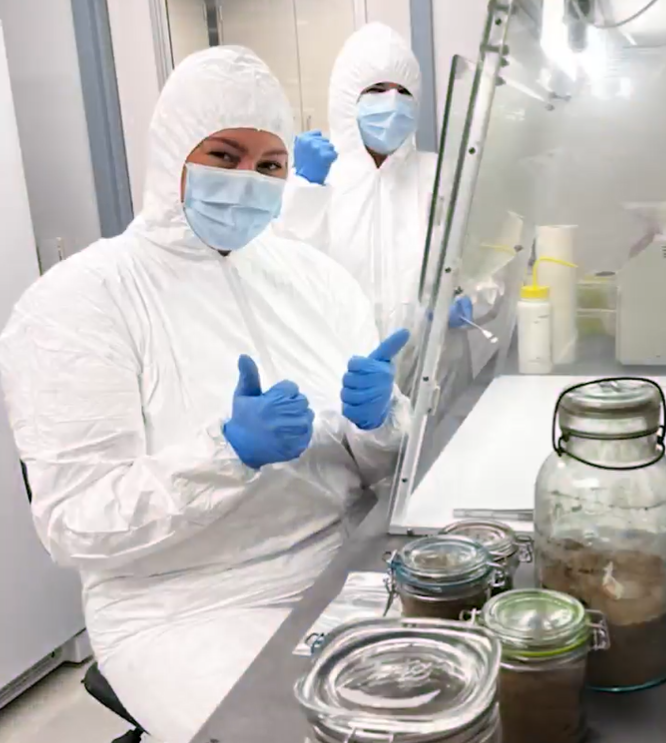
    🪴 That is what makes this jar of dirt so fascinating and unique. Sampled and saved for nearly 100 years by Penn State College of Agricultural Sciences, today, our researchers are uncovering what may be inside.

    🔬👩🏻‍🔬 This interdisciplinary team from Penn State’s Huck Institutes of the Life Sciences Department of Anthropology and Agricultural Sciences is studying the soil. Their goal is to see if there are any traces of ancient DNA and what the chemical makeup of this uncompromised sample could be.

  • Governor proposes 7.1% increase for Penn State’s 2023-24 general support funding

    Governor proposes 7.1% increase for Penn State’s 2023-24 general support funding

    Photo: L. Reidar Jensen / Penn State. Creative Commons.

    Pennsylvania Gov. Josh Shapiro proposed a 7.1% funding increase for Penn State’s 2023-24 general support appropriation and for Pennsylvania College of Technology, and a 2% funding increase for Penn State Agricultural Research and Cooperative Extension, during his first budget address as governor, which was delivered March 7 during a joint session of the Pennsylvania General Assembly.

    The governor’s proposed 2023-24 budget also includes $2.35 million for the Invent Penn State initiative, matching the state’s initial investment last year in the entrepreneurship-focused program.

    Penn State’s general support appropriation, which helps to offset the cost of tuition for Pennsylvania resident students, last increased in 2019-20, when lawmakers approved a 2% funding boost.

    “We are very appreciative that Gov. Shapiro has proposed to increase Penn State’s funding for the next fiscal year, particularly after three consecutive years of flat funding for our general support appropriation,” said Penn State President Neeli Bendapudi. “From keeping tuition costs lower for in-state students, to serving as a repository of knowledge and research-based problem-solving for the state’s agriculture industry, to driving economic development and preparing the state’s next generation of entrepreneurs, workers and leaders, the commonwealth’s investment in Penn State impacts the lives of all Pennsylvanians.

    “This is the beginning of a new partnership with the governor and his administration, and I look forward to working with him and the General Assembly in the months and years ahead to continue to address the needs of our students and strengthen Penn State’s impact on the commonwealth.”

    Read more about how this affects Penn State.

  • Penn State wins sustainability in the Big Ten

    Penn State wins sustainability in the Big Ten

    By Sean Yoder

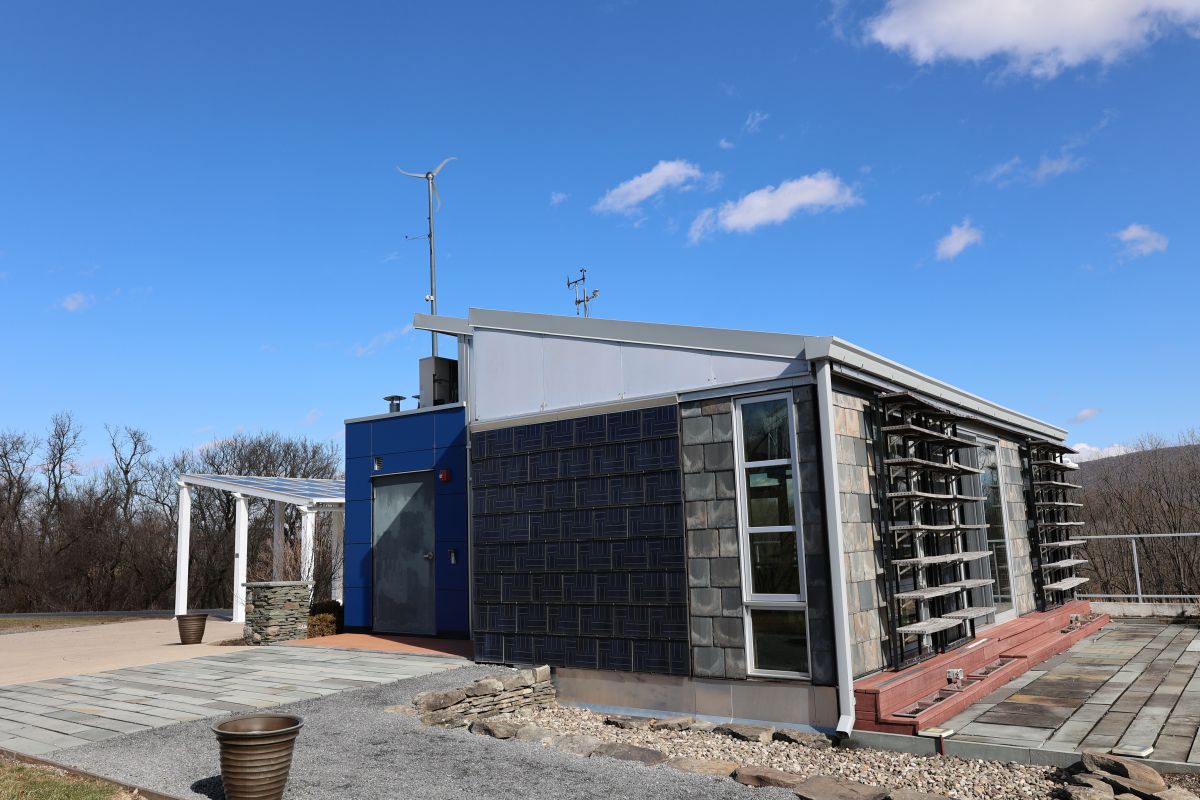
    The MorningStar Solar Home is one of the features of the Sustainability Experience Center at the Penn State University Park campus. Photo Credit: Sean Yoder.

    Penn State recently ranked first among its Big Ten peers (and No. 6 among public universities in the U.S. and No. 14 among all universities in the U.S.) in the QS World University: Sustainability rankings, an assessment that looks at universities’ combined environmental and social impacts. The assessment is the first of its kind, according to Lara Fowler, interim chief sustainability officer and interim director of Penn State’s Sustainability Institute.

    “We were pleased when Penn State made the list,” Fowler said. “We’ve been working on sustainability for 20, 25 years and more cohesively in the last decade.”

    While many people equate environmentalism with sustainability, it’s actually only one facet of the sustainability equation. Penn State’s Sustainability Institute aims to create a holistic approach to human health, economy and happiness. Its vision includes ending poverty, creating a dynamic community infrastructure and addressing environmental justice.

    Launched in the 2012-2013 academic year, the Sustainability Institute was established to engage in new research and projects and support the work that was already being done across Penn State. There are now 29 sustainability councils at colleges, campuses and units at the university. It is up to these councils to find and implement sustainability initiatives within their respective domains. For facilities managers, that could mean rethinking HVAC use for buildings and rooms that are empty for parts of the day. Academic units might incorporate sustainability education into their coursework. Hiring committees can implement equitable practices for candidate searches. The possibilities are truly endless.

    Fowler highlighted the university’s agreement with flooring company Tarkett. Instead of landfilling old carpet, Tarkett recycles that material into the circular economy and provides Penn State a rebate. The company has also committed to using good quality materials and creating healthy indoor air quality.

    A core mission, all the way to the top

    Prior to about 2000, Fowler said sustainability at Penn State was driven more by compliance with federal laws and guidelines. Since then, the approach has become much more systematic, with support from leadership all the way up to the president’s office.

    On Feb. 6, Penn State President Neeli Bendapudi announced the university would move forward with several recommendations made last year by the Carbon Emissions Reduction Task Force. The university reported it is currently studying how to downsize and electrify its vehicle fleet, target energy inefficiencies with lighting and HVAC, explore carbon offsets, duplicate the Nittany Solar Project in Franklin County and expand the Sustainable Labs program.

    “If done correctly, sustainability can help you reduce cost and reduce risk.”

    Beyond energy consumption and emissions, the university also works to move the needle on individual action and education, forming governance groups throughout its colleges, campuses and units; developing sustainability-related courses; and supporting programs such as the Student Farm, Shaver’s Creek Environmental Center and the Sustainable Communities Collaborative.

    Fowler said that overall, sustainability has gone from a model of compliance and merely a nice thing to do, to one that is becoming a core part of the mission of Penn State and its partners.

    A business case for sustainability

    Penn State has also made sustainability a business issue. At the Smeal College of Business, leaders are working to incorporate sustainability into the curriculum and culture. The Major Sustainability platform launched last year with the cooperation of 30 faculty from all departments within the college and lays out how each business major can contribute to sustainability. For example, finance professionals can advance sustainability by incorporating environmental, social and governance factors into investment decisions. Those working in supply chain and information systems can work to maximize efficiency and responsibility and reduce waste. Risk management professionals can consider how to minimize social and environmental risk while promoting resiliency.

    Erik Foley, director of the Center for the Business of Sustainability in the Smeal College of Business, said the Major Sustainability project was the product of a simple question with a devilishly hard answer: What skills and concepts related to sustainability should be taught to business students?
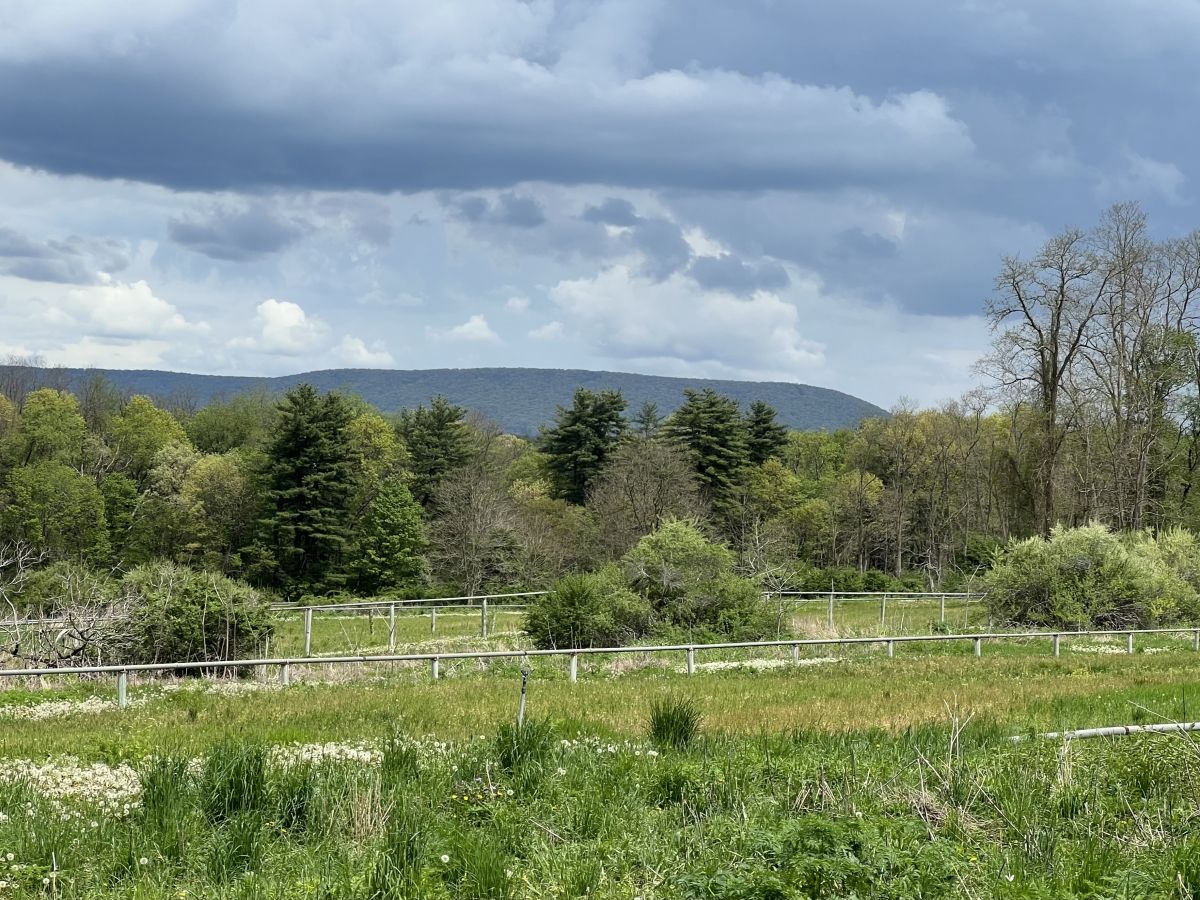
    The Living Filter features 50 miles of piping across its 600 acres to discharge treated wastewater on field and forest. Photo Credit: Sean Yoder.

    “We realized on the educational side, we’re not doing anything else [with sustainability] until we answer that question,” Foley said.

    Faculty and staff then had the epiphany to break down the role of sustainability for each major, and do it in an approachable way in plain language. The response has been positive, Foley said, both for students and professionals who are using the guidelines to steer their decision making.

    Despite positive response, though, Foley admits that the efforts do come with their challenges. He said, “It’s a generational challenge, of how the heck do we figure out how to have a prosperous economy that supports our life support system? That’s a real, real challenge.”

    Foley said he sees business and capitalism as a vehicle for positive change, even if there is a long way to go. There is both a business case to be made in investing in sustainability, as well as an ethical one.

    “If done correctly, sustainability can help you reduce cost and reduce risk,” he said.

    When a business truly and ethically engages in sustainability, he said, it “allows you to attract employees, attract investors and attract customers. That’s what I mean by building long-term value.”

    He added, “I’ll often say to businesses, as well as my students, ‘It doesn’t matter what you call this thing, there is a very simple reality that we face, which is [that] we now have 8 billion people … We have a planet with a limited ability to metabolize and process all of our waste.’ … Right now, every environmental indicator is that we are moving in the wrong direction.”

    The Center for the Business of Sustainability is always looking for corporate collaboration and sponsorship. Many students at the college engage in student consulting projects, with recent work done with companies like Philips, Verizon, Perdue Farms and local companies such as Good Day Cafe. Foley said they also connect companies to faculty researchers.

    This spring, the 2023 Undergraduate Sustainable Case Competition will feature 19 teams from five Penn State campuses and other universities. The focus will be on food insecurity for college students, and Foley said this will give students an opportunity to learn how to advance social justice. The finals will be held at the University Park campus on March 31.

  • Rare insect found at Arkansas Walmart sets historic record, prompts mystery

    Rare insect found at Arkansas Walmart sets historic record, prompts mystery

    Photo: PSU.

    A giant insect plucked from the façade of an Arkansas Walmart has set historic records. The Polystoechotes punctata or giant lacewing is the first of its kind recorded in eastern North America in over 50 years — and the first record of the species ever in the state.

    The giant lacewing was formerly widespread across North America, but was mysteriously extirpated from eastern North America by the 1950s. This discovery suggests there may be relic populations of this large, Jurassic-Era insect yet to be discovered, explained Michael Skvarla, director of Penn State’s Insect Identification Lab.

    Skvarla found the specimen in 2012, but misidentified it and only discovered its true identity after teaching an online course based on his personal insect collection in 2020.

    “I remember it vividly, because I was walking into Walmart to get milk and I saw this huge insect on the side of the building,” said Skvarla, who was a doctoral student at the University of Arkansas at the time. “I thought it looked interesting, so I put it in my hand and did the rest of my shopping with it between my fingers. I got home, mounted it, and promptly forgot about it for almost a decade.”

    It wasn’t until the COVID-19 pandemic that the giant lacewing would find its time to shine. In the fall of 2020, with the world in lockdown, Skvarla was teaching Entomology 432: Insect Biodiversity and Evolution at Penn State. He taught the lab course via Zoom, with students following along remotely on loaner microscopes, and used his own personal insect collection as specimen samples.

    As he went to demonstrate the features of a specimen he had previously labeled an “antlion,” Skvarla noticed that the characteristics didn’t quite match those of the dragonfly-like predatory insect. Instead, he thought it looked more like a lacewing. A giant lacewing has a wingspan of roughly 50 millimeters, which is quite large for an insect, a clear indicator that the specimen was not an antlion, as Skvarla had mistakenly labeled it. The students got to work comparing features — and a discovery was made, live on Zoom.

    “We were watching what Dr. Skvarla saw under his microscope and he’s talking about the features and then just kinda stops,” said Codey Mathis, a doctoral candidate in entomology at Penn State. “We all realized together that the insect was not what it was labeled and was in fact a super-rare giant lacewing. I still remember the feeling. It was so gratifying to know that the excitement doesn’t dim, the wonder isn’t lost. Here we were making a true discovery in the middle of an online lab course.”

    For additional confirmation, Skvarla and his colleagues performed molecular DNA analyses on the specimen. Since confirming its true identity, Skvarla has deposited the insect safely in the collections of the Frost Entomological Museum at Penn State, where scientists and students will have access to it for further research. You can read more about the discovery here.

  • ARL awarded $734M contract by Naval Sea Systems

    ARL awarded $734M contract by Naval Sea Systems

    Photo: U.S. Navy photo by Mr. John F. Williams (RELEASED).

    The Applied Research Laboratory at Penn State (ARL) was recently awarded a $734 million cost-plus-fixed-fee modification to a previously awarded contract by the Naval Sea Systems Command for research, development, engineering, and test and evaluation in support of programs throughout the Department of Defense (DOD) within its core competency areas.

    Collectively, ARL has been awarded more than $2.1 billion, the largest research award the University has received to date. The work is expected to be completed by February 2028.

    ARL is a key developer of guidance and control technologies for undersea systems and vehicles, accomplishes prototyping of novel power and energy systems, and performs state-of-the-art research in computational fluid dynamics. In addition, ARL leads research programs in the areas of communications, information processing, cybersecurity, electro-optics, and directed energy. ARL operates the Navigation Research and Development Center for the test and evaluation of our nation’s most precise positioning, navigation, and timing systems. ARL is a center of excellence in materials and manufacturing and supports both industry and the U.S. Navy with advanced materials and the development of additive manufacturing technologies.

    “With our 78-year history, ARL’s decades of institutional knowledge positions us to be uniquely successful as we research cutting-edge technology.  We’re proud to continue our mission of improving national security through research, discovery, and innovation,” said ARL Executive Director Allan Sonsteby in a recent press release.

  • New $88M Engineering Design and Innovation Building opens on campus

    New $88M Engineering Design and Innovation Building opens on campus

    Photo: Penn State College of Engineering.

    Penn State celebrated a ribbon cutting at its new $88M Engineering Design and Innovation Building on the west end of campus. The building features “cornerstone to capstone” maker spaces to help undergraduates collaborate with academia and industry partners to solve real-world problems.

    The building, which is formally known as West 2 is part of a $1 billion revitalization effort on the west end of campus.

    According to the university, about 2,100 square feet of the building are devoted to general purpose classroom space while another 8,200 square feet are set aside in support of research. The building also includes 11 total classrooms, a high-bay research space, a number of maker’s spaces and collaborative areas — all for a college that’s grown more than 40% in 15 years.

    The EDIB also boasts expanded areas for The Learning Factory and the Factory for Advanced Manufacturing Education (FAME) Lab, in addition to housing the School of Engineering Design and Innovation. Penn State is still in the process of moving into the building, with machinery and other equipment that still must be added. The university expects the EDIB to be fully ready by this fall.

    You can read more about the facility and how its poised to impact Engineering — and moving inventions into commercialization at the Centre Daily Times.

  • Penn State is buying a farm; here’s how the research space will be used

    Penn State is buying a farm; here’s how the research space will be used

    Photo: CENTRE DAILY TIMES/ABBY DREY.

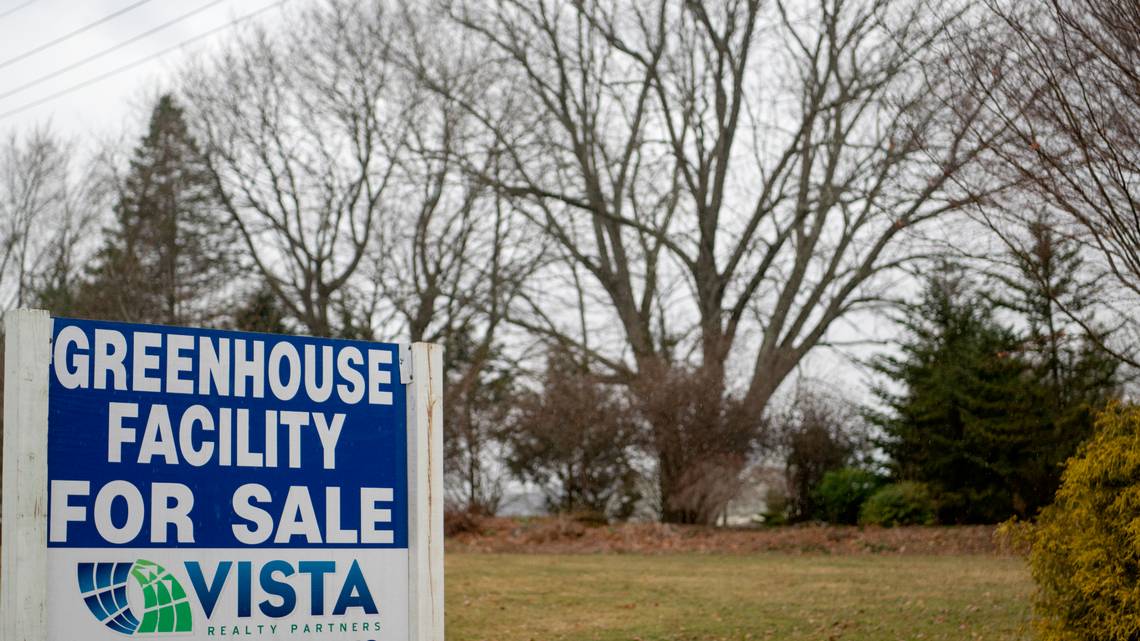
    Penn State is set to purchase 20.36 acres in Benner Township, Centre County, for $2.35 million — in an effort to further agricultural research.

    The property includes a 25,000-square-foot research greenhouse, a 3,324-square-foot residence and nearly 10 acres of adjacent land that can host field experiments, such as testing new crop varieties.

    According to the university, the site could provide future opportunities for research on invasive plant pests and genetically modified plants requiring biocontainment. It can also prioritize experiments focused on global food security and sustainability, with plants that might be more resistant to droughts and/or pests.

    The property is being sold by Richard and Andrea Grazzini. Richard is a Penn State alum who earned a master’s in horticulture from Purdue and a Ph.D. in genetics from PSU. He has invented more than 50 new plant varieties, many of which are patented.

    “When we purchased our small farm in 2007 to support our GardenGenetics business, the plan was to live and work here for the remainder of our lives,” Richard said. “We tried to develop the farm and greenhouses accordingly, and it has served us well.  GardenGenetics has developed more than 100 licensed plant varieties in the global horticultural markets on this farm.”

    “And then … grandchildren!” he said about their change of plans. “ Relocating and downsizing our home and business became a priority, and we put the farm on the market.”

    He said that with the purchase, Penn State is purchasing a sophisticated R&D greenhouse operation. “It’s one which can readily be adapted to the current and future needs of the College of Agricultural Sciences as well as the intercollege Plant Works initiative.  We are very pleased to know that Penn State will continue our stewardship of the Mendels Way property.”

  • Prolific IBM inventor takes on Penn State Research: Let’s make this into Happy Silicon Valley

    Prolific IBM inventor takes on Penn State Research: Let’s make this into Happy Silicon Valley

    By Stephanie Kalina-Metzger

    Photo: Provided.

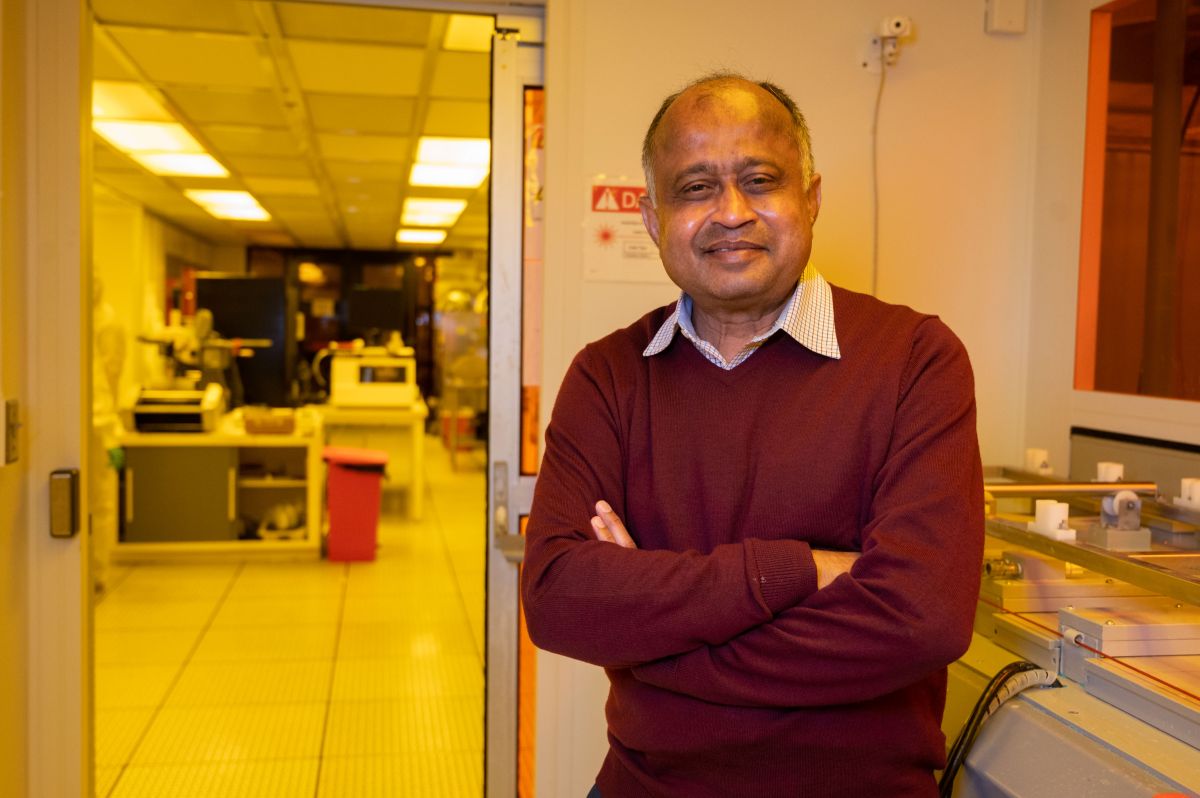
    All it took for Madhavan Swaminathan was a little encouragement to jumpstart his career in innovation. The new head of the Department of Electrical Engineering in Penn State’s School of Electrical Engineering and Computer Science comes to Penn State by way of Georgia Tech, where he spent 28 years leading the 3D Systems Packaging Research Center and the National Science Foundation Center for Advanced Electronics through Machine Learning.

    Swaminathan, who was born in India, said that innovation wasn’t really encouraged when he was young, but that all changed when he came to the United States, earned a Ph.D. in electrical engineering from Syracuse University and joined IBM.

    “At that time, IBM was investing in the next supercomputers, when I was asked to develop new packaging technologies and my manager told me to concentrate on developing innovative solutions in that area,” said Swaminathan.

    For those who might conjure up the idea of boxes and bubble wrap when it comes to packaging, Swaminathan explains that the packaging he speaks of is an entirely different concept. “If you view any electronic system, it has two parts. The first part are the transistors within a chip and the second part is the packaging. The transistors within the chip act as the brain and then there’s everything around the chip that supports its function, similar to the human body,” he said.

    Swaminathan goes on to explain how minute these transistors are. “There can be one billion transistors within a chip and those transistors have to communicate within the external world and with other chips as well. To reduce the size of the system, you have to work on new packaging technologies,” he said, adding that packaging is very important in 5G and 6G communications and computers, where efficiency and battery life are important to send the electrons back and forth between chips.

    “Students these days are very different. They are very much interested in startups and commercializing ideas, but college faculty members don’t always have an eye towards business. You need to have both sides and I intend to meet with faculty to encourage them towards providing a holistic education focused not only on research, but also on marketing and business.”

    Being given the green light to begin innovating at IBM was a boon for Swaminathan and he took to the task with enthusiasm. From 1991 to 1994, while working there, he registered six patents related to advanced packaging.

    Later, during a 28-year career at Georgia Tech as the John Pippin Chair in Microsystems Packaging and Electromagnetics at the School of Electrical and Computer Engineering, he developed 25 additional patents, mainly related to advanced packaging and heterogeneous integration of semiconductors.

    “At Georgia Tech, we were studying new technologies for packaging and were licensed to create companies,” said Swaminathan, adding that Jacket Micro Devices was just one of those companies that began under his purview and was later acquired by a larger company.

    Throughout all of these achievements, what excites Swaminathan most, he said, is living between the worlds of innovation and commercialization. “Being able to commercialize that which emerges from leading-edge research is a very important component, otherwise these great ideas can get lost,” he said.

    A Penn State recruit

    Swaminathan said that he wasn’t actively seeking a job when Penn State came calling. “I was actually very happy where I was at the time, but I was encouraged to apply via a search firm, so I did.”

    “I can’t see any reason why Happy Valley can’t one day be known as Happy Silicon Valley.”

    Swaminathan explains that he made it through the first round and a final interview before the Dean contacted him and asked him what it would take to convince him to relocate to Happy Valley.

    “Continuing my research was very important to me and what struck me about Penn State were the people. I connected with them and their dedication to cutting-edge research was truly outstanding, which is why I thought, why not?” he said.

    Swaminathan brings with him to Penn State a large packaging research center, which will include 13 other universities and which he will continue to lead, paving a path for his students.

    “Students these days are very different. They are very much interested in startups and commercializing ideas, but college faculty members don’t always have an eye towards business. You need to have both sides and I intend to meet with faculty to encourage them towards providing a holistic education focused not only on research, but also on marketing and business,” he said.

    “Being able to commercialize that which emerges from leading-edge research is a very important component, otherwise these great ideas can get lost.”

    The reason Swaminathan cites commercialization as high on his list of priorities is because of the challenges faced within the United States.

    “Whatever is done in the lab needs to translate into manufacturing. Right now, there are two challenges. [The first is] reshoring. Currently most manufacturing in semi-conductors happens outside of the United States. That needs to come back. Also, there’s the supply chain problem. The U.S. produces only 12% of chips here, while consuming more than 50%,” he said.

    Swaminathan said that he’s looking forward to living and innovating in Happy Valley and is optimistic about the future.

    “I can’t see any reason why Happy Valley can’t one day be known as Happy Silicon Valley,” he said with a smile.

  • FREE intrapreneurship conference focuses on employees as change makers

    FREE intrapreneurship conference focuses on employees as change makers

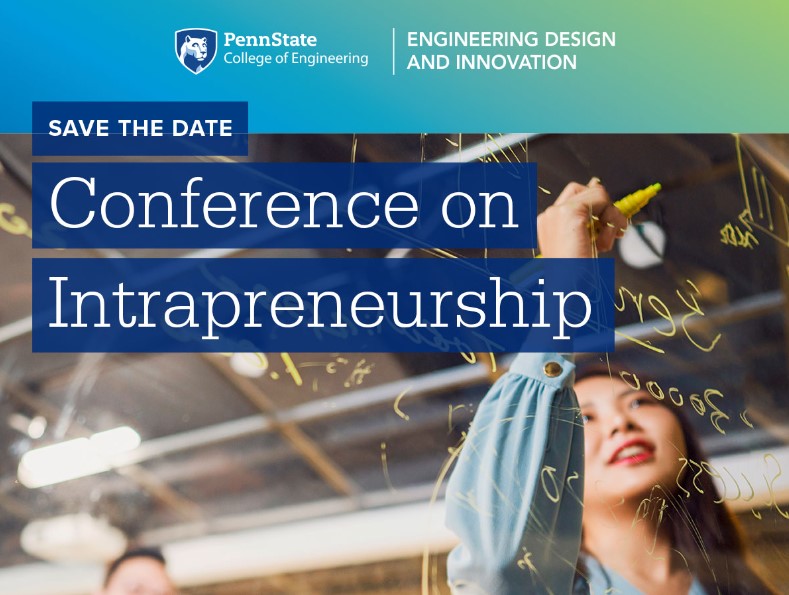
    Mark your calendars for the Conference on Intrapreneurship Employees as ChangeMakers, taking place May 11 at the Eric J. Barron Innovation Hub. The conference, which is free, is presented by the Penn State College of Engineering’s School of Engineering Design and Innovation and will focus on how employees can create innovation from within a company.

    Registration is limited to 80 attendees. RSVP NOW to save your spot! You can register here or at the QR code below. For questions, please contact Frank Koe, teaching professor, at ftk2@psu.edu.

    “Innovation is a popular word these days,” organizer Frank Koe said. Koe is a teaching professor of engineering entrepreneurship. He said that, while all companies see themselves as ‘innovative,’ he is curious about how they define the term in their own firms.

    “A recent Gallop poll discovered that nearly 54% of employees have been found to be unengaged at work,” he said. “Everyone matters these days and the companies that can bring out the best in everyone and see that employees have more to offer than fulfilling a job description to the letter will innovate at the speed of change and be true innovators.”

    The conference will bring together small and medium-sized businesses to discuss the inclusion of intrapreneurship within their company cultures.

    Group discussions will include:

    • Intent of intrapreneurship
    • Role of management and company culture
    • Rewarding intrapreneurial innovation and consequences of “failure”
    • Hiring practices for intrapreneurial growth
    • Best practices in intrapreneurialism
    • Examples of intrapreneurialism working

    Registration is limited to 80 attendees, so RSVP now to save your spot! You can register here or at the QR code below. For questions, please contact Frank Koe, teaching professor, at ftk2@psu.edu.