Category: Penn State

  • Understanding Trump’s Actions and Policies and “Where the Puck is Going”

    Understanding Trump’s Actions and Policies and “Where the Puck is Going”

    As the Trump administration moves forward with its agenda, several key policy changes and actions are poised to significantly affect higher education. Here’s a detailed breakdown to help clarify the steps being implemented and those proposed for the future:

    • Abolishment of the Department of Education: One of Trump’s major pledges is to dismantle the federal Department of Education. This move would shift responsibilities to state governments.
    • Changes to Diversity, Equity, and Inclusion (DEI) Initiatives: The administration has vowed to continue its crackdown on DEI programs in higher education. This will mean reduced federal support for initiatives aimed at fostering diversity and inclusion within colleges and universities.
    • Modification of Title IX Regulations: Proposed changes include rolling back protections expanded during previous administrations, such as those related to sexual harassment and assault. This could alter how colleges address and manage accusations and incidents on campus.
    • Student Loan Relief and Financial Aid: Trump’s policies will restrict the scope of student loan forgiveness and reshape federal financial aid programs.
    • Shift in Research Funding Priorities: The administration is likely to alter the focus of federal research funding, possibly prioritizing applied research that directly supports industry and technological advancement over basic research.
    • Taxation of University Endowments: There’s a proposal to increase the tax on university endowments, particularly targeting those institutions that are perceived to be promoting ideologies contrary to the administration’s views.
    • Emphasis on Vocational Education: Trump and his administration advocate for a stronger emphasis on vocational and technical education as opposed to traditional four-year degrees. This shift aims to align educational outcomes more closely with the needs of the job market.
    • Regulatory Environment: Expectations are that the administration will enforce a more stringent regulatory environment that could impede the autonomy of higher education institutions in certain administrative and academic matters.

    What are your thoughts? Let’s hear them. (You can click on the text, or comment below).

  • Will Penn State Follow Another Big 10 School’s Lead in Innovating the Future of Higher Ed?

    Will Penn State Follow Another Big 10 School’s Lead in Innovating the Future of Higher Ed?

    As we look ahead to potential shifts in education policy under the Trump administration, Penn State stands at a pivotal crossroads. With the proposed abolishment of the Department of Education and shifts in funding priorities, it is crucial for both the university and local businesses in State College, PA, to remain agile and proactive.

    Drawing inspiration from Purdue University’s proactive strategies under Mitch Daniels, Penn State has an opportunity to lead by example. Purdue’s introduction of initiatives like the three-year degree program and tuition freezes have made education more accessible and affordable. These are the kinds of innovations that could serve Penn State well as it navigates the changing landscape.

    The Trump administration’s focus on reducing federal involvement in education and increasing state control presents both challenges and opportunities. Over the past decade, Penn State has received flat state funding, with general support appropriation consistently set at around $242.1 million annually. For Penn State, this could mean greater flexibility AND the necessity for increased self-sufficiency. Strategic responses must include diversifying funding sources beyond federal grants, enhancing online education offerings to meet the growing demand for flexibility in learning, and strengthening ties with private sector partners to ensure educational programs align closely with job market needs.

    Local businesses and the broader community in State College can also learn from these shifts. Just as industries like newspapers have had to rapidly transition from print to digital, businesses will need to be equally adaptable. This transition is underscored by the preference for online classes among students on campus, showing a shift in consumer preferences that Penn State might leverage to enhance its educational delivery and engagement. They must be prepared to pivot their operations and strategies in response to the decreasing predictability of federal policy directions and the increasing speed of technological advancements.

    Predictive Planning and Strategic Agility

    By “reading the tea leaves,” or analyzing current trends and proposed policies, Penn State and local businesses can prepare for likely future scenarios. This means being well-informed, staying connected with policy developments, and being ready to implement changes swiftly. Preparing for a range of outcomes will enable both the university and local businesses to respond effectively, no matter what challenges or opportunities arise.

    For Penn State, embracing AI and other technological innovations must be key to enhancing both administrative efficiencies and the student learning experience. For local businesses, understanding and leveraging the power of Ai could mean the difference between thriving and falling behind.

    Furthermore, the introduction of Alyssa M. Wilcox as the new Vice President for Development and Alumni Relations at Penn State reflects a strategic pivot. Her background at Purdue, a university known for its innovative approaches under Daniels, could bring valuable insights into navigating the expected changes in funding and policy from the federal level. The hire did not capture the excitement tied to the new Defensive Coordinator, yet it could hopefully be more impactful. 

    Invitation for Community Insight

    As we “feel the earth move under our feet” with these shifts in educational policy, demographics, technology and customer dynamics, let’s remember that innovation comes from: reading “the tea leaves and seeing where the puck is going”.  How can Penn State and our community turn these changes into opportunities? Share your thoughts below. 

    Thinking things will stay the same is not an option. How can Penn State and our community turn these changes into opportunities? Let’s engage and innovate, ensuring a thriving future by embracing the new and the next.  What do you think? (You can click on the text, or comment below).

  • Penn State “All In” on Big Time Football

    Penn State “All In” on Big Time Football

    By Chris Buchignani

    Penn State Athletic Director Pat Kraft has thrown down the gauntlet.

    The last of the confetti had barely been swept from the turf of Atlanta’s Mercedes-Benz Stadium following Ohio State’s 2024 national title when a key cog of that winning machine had bolted for the Buckeyes’ conference rivals.

    Jim Knowles, architect of OSU’s championship defense, spurned offers to remain in Columbus or depart for Oklahoma to instead become the new defensive coordinator at Penn State. A Pennsylvania native, Knowles was surely enticed by the promise of a new challenge and an opportunity to “come home,” but money talks; the bottom line that secured James Franklin his choice of top assistants was a record-breaking contract that will reportedly pay Knowles more than $3 million annually.

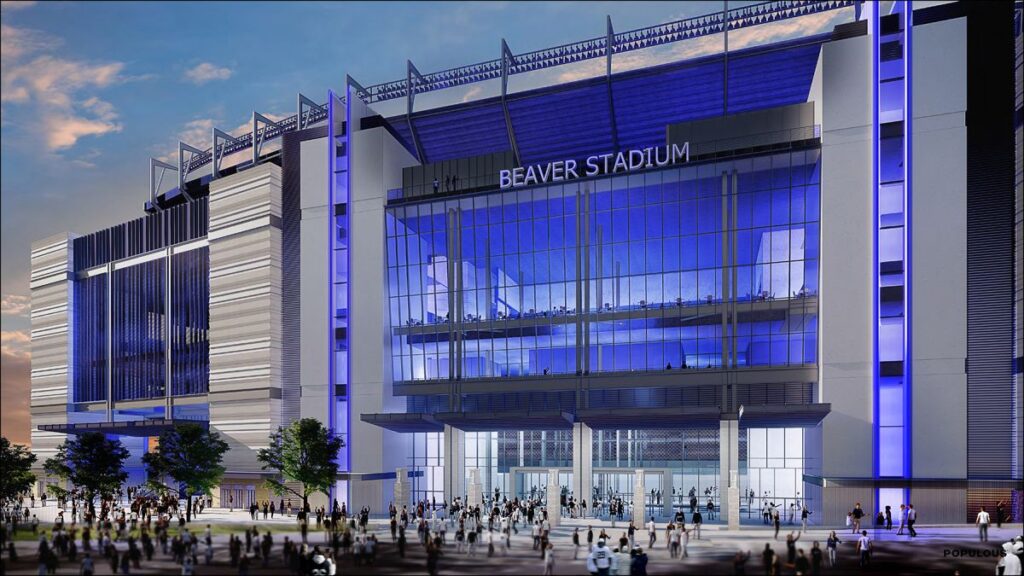
    For reference purposes, the deal makes him the highest-paid coordinator at the college level, and only three NFL coordinators made more than $3 million in 2024. The Knowles deal is a splash move for a Kraft-led Athletic Department that has already committed to a $700 million major renovation of Beaver Stadium. It speaks to how the current stewards of one of college football’s historic brands are aggressively tackling the changing times.

    Among long-time fans of the sport, college football in its current state is barely recognizable compared to the traditional product they enjoyed as recently as 2019, when the final pre-COVID season played out rather like those of decades prior. On the other side of the pandemic’s one-year vacation from reality, July of 2021 sounded a death knell for the college game as it had existed since the mid-20th century. That’s when rule changes went into effect allowing college athletes to, for the first time, directly monetize rights to their name, image, and likeness (NIL). Paired with unprecedented mobility that has only been strengthened by the courts in recent years via the “transfer portal,” NIL has, in less than five years, wrought a wholly new landscape where the top talent is always for sale. This year, the champion Buckeyes’ roster carried an estimated price tag north of $20 million – a far cry from the recent past when the NCAA militantly policed the amount of free cream cheese athletes got for their morning bagels.

    If college football’s unfolding transformation, with free agent players selling their services to the highest bidder, rankles the sensibilities of the average fan, then the dysphoria is amplified exponentially here in Happy Valley. For Penn State fans who prided themselves on rooting for one of college football’s cleanest (let’s say “least dirty”) programs, the idea of shelling out big bucks to the best players has been a hard sell. The transition from unseemly cheating to necessary cost of doing business was jarring.  Administrators used to enjoying champagne results on a beer budget experienced intense sticker shock. Yet these changes have forced a reckoning, and with this extraordinary outlay to Jim Knowles, Penn State’s leadership has fully committed to paying the price of admission to college football’s VIP class, no matter the cost.

    “Penn State’s leadership has fully committed to paying the price of admission to college football’s VIP class, no matter the cost.”

    Landing the most respected and coveted defensive mind in the sport should pay immediate dividends on the field for a Penn State program projected to rank in the preseason top five, not to mention the gamesmanship of spiriting away a key asset from your most daunting foe. But the investment necessary to close the deal made its own strong statement about a shifting institutional philosophy and the current administration’s vision for the University’s future, one that will resonate well beyond the halls of Old State and across the entire region.

    Amidst a backdrop of budgetary constraints and strategic pivots, Penn State University faces a complex matrix of challenges and opportunities as it navigates the uncertain terrain of federal funding shifts, campus dynamics, and economic pressures.

    Penn State, like many major universities, relies heavily on federal funding, with a significant portion of its budget dedicated to research initiatives funded by agencies like the NIH. However, recent political developments have cast a shadow of uncertainty over the continuity of this funding. As the administration gears up for potential budget cuts, the University leadership is caught in a delicate balance of fiscal prudence and strategic foresight.

    “As the administration gears up for potential budget cuts, the University leadership is caught in a delicate balance of fiscal prudence and strategic foresight.”

    The potential closure of several Commonwealth campuses further complicates the financial outlook. These campuses, while expensive to maintain, serve as crucial educational outposts, offering access to higher education across the state. Their closure could streamline expenses but might also shrink the University’s reach and impact on regional education, not to mention its relationship with key legislators in the affected areas.

    Simultaneously, Penn State anticipates an influx of students in the fall of 2025. This increase in enrollment presents both an opportunity for revenue growth through tuition and fees, and a challenge in terms of accommodating and providing quality education to more students. The need for expanded facilities, resources, and possibly even new constructions could strain the University’s budget further.

    At this time, the University’s heavy investment in sports, particularly football, plays a dual role. On one hand, it boosts community spirit and enhances the school’s brand, drawing students, alumni donations, and media attention. On the other, it requires substantial financial outlay that could be contentious when academic and research departments are facing financial scrutiny, irrespective of how the funding is sourced.

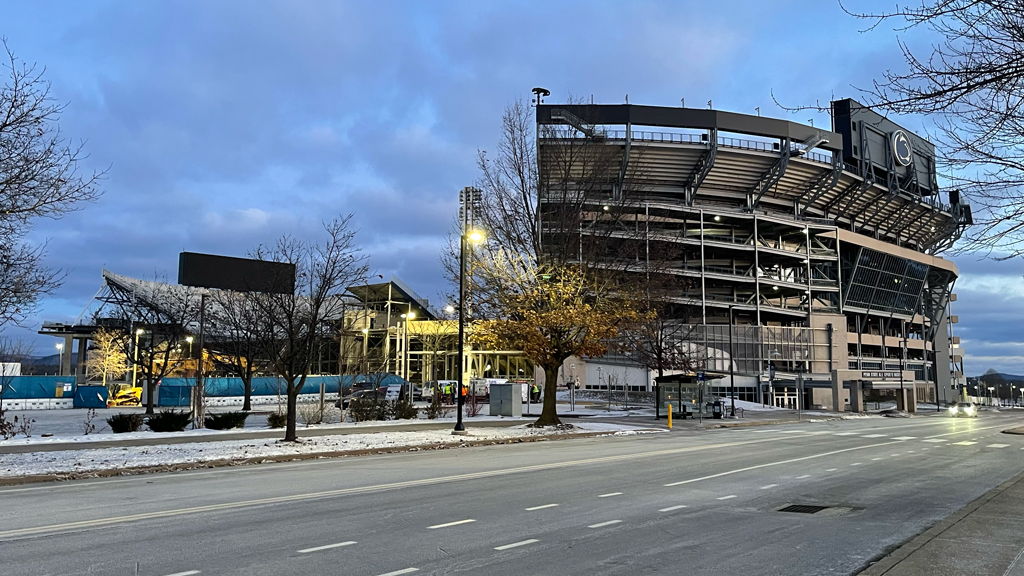
    Beaver Stadium under construction.

    Outside the campus, the surrounding community has pegged tourism as its primary economic development strategy, heavily leveraging the Penn State athletics and cultural pull to attract visitors. This symbiotic relationship underscores the University’s influence on local economics but also highlights the dependency on continued success and investment in these areas.

    As Penn State stands at this crossroads, the decisions made today will undoubtedly ripple across the educational and economic landscapes of tomorrow, shaping the future of the institution and its community. 

    Chris Buchignani is co-host of The Obligatory PSU Pregame Show, contributor to several other Penn State-focused media outlets, and vice president of the Mount Nittany Conservancy. He teaches a class on Penn State Football History for Penn State OLLI.

  • Is private equity eyeing Penn State football? Exploring a $3+ billion opportunity

    Is private equity eyeing Penn State football? Exploring a $3+ billion opportunity

    By Greg Woodman

    Photo provided

    Earlier this year, an ESPN article asked a provocative question: “As college sports face more change, is private equity money coming in?” The sweeping disruptions occurring in college athletics—shifts in player compensation, NIL deals, and skyrocketing media rights—have opened the door for new ideas and, potentially, new investors. Private equity firms, constantly on the lookout for underutilized markets with high potential, may have their eyes set on college athletics as the next frontier.

    In Happy Valley, we’ve already seen private equity bring new life and opportunity to landmarks like The Nittany Lion Inn and, soon, The Penn Stater. These historical icons have been given a second wind, and it’s worth wondering—could private equity do something similar for Penn State football?

    Penn State Football: A $3 Billion Opportunity?

    Imagine if Penn State football took a leap beyond the boundaries of collegiate athletics and transitioned into a professionally funded model. This is, admittedly, a big leap, but let’s explore what that might look like.

    Penn State has long been a financial powerhouse in college sports, generating significant annual revenue—often surpassing $100 million—from ticket sales, broadcasting rights, sponsorships, licensing, and alumni donations. In today’s shifting landscape, where schools are now allowed to pay players directly on top of their NIL deals, it’s not unthinkable that private equity might “come to town,” eyeing the opportunity presented by what could become, in many ways, a professional football operation.

    Drawing Parallels: The Washington Commanders

    Let’s use a professional team, like the Washington Commanders, as a reference point. Recently valued at $7 billion, the Commanders show us what an iconic brand, even one with challenges, can command in the sports marketplace today. Penn State football may not be an NFL franchise, but it has a lot of similar components—a loyal fan base, a massive stadium, and a history of success. Could a professionally operated Penn State football program find itself in a similar valuation range?

    Consider these factors:

    • Revenue Generation: Penn State football already brings in over $100 million annually. If it were to operate as a private equity-backed professional team, revenue streams like broadcasting, merchandising, and digital content could be maximized even further. With the added financial resources of private equity, the sky might be the limit.
    • Fan Base: With an incredibly dedicated fan base, both regionally and among alumni, Penn State’s following rivals many professional franchises. The Washington Commanders benefit from a broad NFL market, but Penn State’s alumni network is massive, and their loyalty could serve as a bedrock for growth if new opportunities, like a larger national or even global reach, were explored.
    • Stadium Value and Assets: Beaver Stadium, one of the largest in the country, adds tangible value. While the stadium is aging and would likely require updates to meet modern standards, it still serves as an iconic asset that enhances the program’s valuation.
    • Brand Equity: Perhaps the biggest intangible is Penn State’s brand equity. With decades of tradition, success, and a connection to the Big Ten conference, the brand is synonymous with college football itself. This historical strength adds considerable value that would influence any valuation discussion.

    Speculating on Valuation

    If we play out this speculative scenario, a valuation between $2 billion and $5 billion for Penn State football is not unrealistic. While the program would have some revenue limitations compared to an NFL team—like lower TV deal revenue or restrictions on player salaries—these could be offset by strong fan loyalty, a massive stadium, and a historically successful brand.

    Crunching the Numbers for Private Equity

    Private equity firms often use a multiple of earnings when determining an acquisition’s value. Let’s assume that as a professional team, Penn State football could generate about $200 million annually in revenue, with a profit margin of around 20%. That’s approximately $40 million in annual profit.

    Using a typical EBITDA multiple for professional sports franchises, which ranges from 10 to 15 times earnings, we could estimate a valuation like this:

    • Low End: 10x $40 million = $400 million
    • High End: 15x $40 million = $600 million

    However, the true value of Penn State football isn’t just about annual profit—it’s also about assets like Beaver Stadium, the brand equity it has built over decades, and future growth potential. When you factor these elements in, a private equity firm would likely need to pay $2 billion to $3 billion to acquire Penn State football if it were ever put up for sale.

    Challenges to Privatization

    Of course, there are significant hurdles to this vision. College sports programs are part of their universities, and in Penn State’s case, it’s a public institution that answers to the state and alumni. Transitioning to a privately owned model would require major shifts in NCAA rules and face cultural resistance from fans who value the amateur spirit of college football. These are not minor challenges—they are monumental, and any potential buyer would need to navigate them carefully.

    But in a landscape where private equity is already making inroads in unexpected places, nothing is entirely off the table.

    What’s Next?

    The concept of private equity in college sports is bold, fraught with challenges, but also filled with opportunity. As the world of college athletics continues to evolve—moving further into territory once reserved for professional sports—Penn State football could represent a new kind of opportunity.

    What do you think? Could private equity be the future of Penn State football, or any other major college program? We’d love to hear your thoughts—comment below.

  • Penn State’s big investment in new sports facilities is an investment in the Happy Valley economy

    Penn State’s big investment in new sports facilities is an investment in the Happy Valley economy

    Beaver Stadium West Exterior | Provided by Penn State Athletics

    By Holly Riddle

    According to the Happy Valley Sports and Entertainment Alliance, “In the aggregate, sports events and associated activity generate an annual economic impact of $417 million within Centre County, supporting 4,315 jobs with $133 million in employee compensation. Impacts of this economic activity within Pennsylvania are $467 million.” 

    The Alliance also noted that, as of a 2024 study:

    • Penn State football home games are the biggest drivers of sports economic impact, generating $87M in visitor spending and accounting for about 890,000 out of Centre County’s annual 1.7M attendees. 
    • Other Penn State athletic events draw 666,500 attendees, while countywide events at venues such as Nittany Valley Sports Centre, C3 Sports, Centre Region Parks and Recreation facilities attract 150,000 people annually.
    • Sporting event visitor spending totaled $102 million — $17 million of which came from non-campus events — and generated a total of $149 million in total economic impact for the county.

    With such a major economic impact, it’s no surprise that myriad sports facilities around University Park are receiving a facelift — or new life completely — this year and in the coming years. 

    According to Penn State Athletic Director Pat Kraft, “Penn State’s investment in these athletics facilities will continue to have a positive impact on the Centre Region community. The ability for our facilities to host events beyond our intercollegiate athletics events will have an economic impact for our local community far beyond the seven football home weekends per year. The investments we are making in our facilities will enhance the fan experience with improved concessions, restrooms and circulation.”

    So what can you expect at each? 

    Beaver Stadium

    Penn State Engineering Entrepreneurship Program

    Image 1 of 3

    View the eLetter

    The project most in the limelight, of course, has been Beaver Stadium.

    “As you look specifically at the Beaver Stadium revitalization project, 75% of material procurement and labor has been from Pennsylvania to date. The project will continue until 2027 and the labor force alone will have a $15 million economic impact. There will be 400–450 workers will be on site daily at the peak of the project and there will be 800–1,000 unique tradespeople working in the summer of 2025 and 2026,” said Kraft. 

    The project is expected to be fully complete prior to the start of the 2027 football season. For all the up-to-date information, look to gopsusports.com/beaverstadiumrenovation.

    The Indoor Practice Bubble

    Jeffrey Field Bubble Rendering | Provided by Penn State Athletics

    According to Penn State, this $9.8 million project will offer extra practice facilities for varsity athletic. Construction began in August, with the anticipated completion of the turf pitch in May 2025. The bubble (air supported structure) will be installed over the pitch in late fall 2025, to be used in the winter and early spring each year. The field is expected to be used year-round, but only covered by bubble in the late fall to early spring.

    Jeffrey Field Soccer Complex

    10-Story-1

    Image 1 of 3

    Construction for this $21.25 million project also began this fall, with completion anticipated in fall 2025. According to Penn State Athletics, “The project aims to modernize soccer experience for all involved, including athletes, coaches and fans. The fan experience will not change this fall season. But next fall, fans can expect concessions, indoor bathrooms, entry plazas and more. Improves fan experience and allows for the ability to host events at the facility.”

    Greenburg Indoor Sports Center

    Story-4-line3

    Image 1 of 13

    A $31.9 million project, the Greenburg Indoor Sports Center will, when completed in summer of 2025, newly offer a food services athletic training table, as well as a wellness and athletic training center for 800-plus student-athletes. 

    Recently Completed Projects


    Penn State Field Hockey Complex  

    The construction team put the final touches on the upgraded facility ahead of the home opener this fall. The $12.8 million project included upgrades, improvements and additions encompassing dressing areas, a locker room space of officials, ticket office, public restrooms, concession areas, press and media boxes and a television broadcast booth. 

    Bryce Jordan Center

    This summer, work has been done to renovate the 1855 Club event space, previously known as the Founder’s Room, as well as the beginning of phased suite renovations. Fans will also see a second check-out free concession location, featuring Amazon’s Just Walk Out technology, similar to the BJC’s Pick & Roll concession stand.

    19th Hole Café at Walker Clubhouse 

    Completed last year, the 19th Hole Café enhanced the customer experience and expanded available services at the Walker Clubhouse. So far it has been well received, with Trivia Nights being a highlight among patrons. 

    Medlar Field at Lubrano Park 

    Initially spearheaded in part by the State College Spikes in an effort to meet new MLB standards, upgrades at the baseball field were multifaceted, with the most noticeable to fans being the new high-definition video board that is approximately 5x larger than its predecessor, new LED on-field lights and a fully replaced (and slightly reconfigured) outfield wall. 

    Holly Riddle is a freelance lifestyle and business journalist. She can be reached at holly.ridd@gmail.com. 

  • Get up close and personal with the Materials Research Institute’s latest endeavors

    Get up close and personal with the Materials Research Institute’s latest endeavors

    7-Story-1

    Image 1 of 2


    Penn State’s 2024 Materials Day is coming up! Materials Day is an event that connects Penn State talent with companies and shares Penn State’s latest research and discovery with industry, government and service partners.

    The event is designed to share Penn State’s vast materials research knowledge and infrastructure with industrial and government research and service partners, so attendance is critical if you’re looking to stay abreast of Penn State Materials news or if you are looking to identify graduating students for future positions.

    Materials Day is also focused on interaction and discussion among attendees. Industry reps can talk with students and faculty about their company, creating connections and visibility that benefit the company as they announce job openings or come to career fairs.

    Attending companies can also see what faculty are working on, leading to potential research collaborations or connections with graduating students. In addition to the external collaborations, Materials Day is also a chance for Penn State groups to collaborate internally form teams to apply for grants and proposals.

    As David Fecko, director of industry research collaborations at Penn State’s Materials Research Institute, said, “Penn State is one of the leading universities in the country in terms of Materials Research. Materials Day is a great way to get an overview of all of the great programs and research projects that are happening at this moment in time. As with all large universities, the programs, students and even faculty tend to turn over every few years, so even if you have attended Materials Day in the past, you will find something new and interesting this fall. Current programs that are going through significant change are all semiconductor research areas, materials impacting the medical fields and sustainability and critical minerals and materials.  Come and let us show you all the things that we are working on!”

    2024 Materials Day
    When: Oct. 29–30, 2024 
    Where: HUB-Robeson Center and the Millennium Science Complex, University Park, PA
    Registration: www.mri.psu.edu/mri/events/2024-materials-day

    Check out some of the highlights from a previous Materials Day!

    Video: Penn State Materials Research Institute (MRI) / Seana Wood

  • The Penn State minor that’s revolutionizing the college experience

    The Penn State minor that’s revolutionizing the college experience

    By Jodie Dello Stritto

    The world of work is changing fast. An innovative Penn State minor — the Product Innovation Cluster of the Entrepreneurship and Innovation Minor — from the College of Engineering gives students opportunities to solve real-world problems, preparing them to navigate an increasingly entrepreneurial world.

     “Engineering entrepreneurship’s impact is two-fold,” according to Ted Graef, program director in Penn State’s School of Engineering Design and Innovation. 

    “It provides entrepreneurial business knowledge and the creative, entrepreneurial mindset to complement credentials in engineering and other fields. These are the skills businesses seek in their new engineers and that employers seek in all careers today,” he said. “Our students are learning to be fearless problem solvers, seeking creative solutions and taking educated risks — qualities that distinguish them among their peers.” 

    Students agree that the Entrepreneurship and Innovation Minor and the program’s Product Innovation Cluster have a transformative impact, helping them gain unique personal and career development advantages, even “revolutionizing their Penn State experience” and helping them “crystalize their career and personal goals and ambitions.”

    Penn State’s program was one of the first in the country to offer an 18-credit Entrepreneurship and Innovation Minor, , open to all majors. Graef emphasized that the minor offers an opportunity for students seeking to get outside their comfort zone and take ownership of their career path. 

    “Any student that wants to take charge of their career and life in general should seek out this opportunity,” he said. “Students will learn business fundamentals to complement their major and will learn to be fearless problem solvers. Every student should be exposed to the entrepreneurial mindset, not just those who want to start companies. It is beneficial for all students to have these skills no matter what career path they follow.”

    The program also teaches intrapreneurship — how to drive innovation from within an existing company.

    “Intrapreneurship is a critical element of the program because we know that Penn State engineers are in high demand, working in leadership positions at major firms worldwide,” explained Frank Koe, teaching professor in the School of Engineering Design and Innovation. The program hosts an annual Conference on Intrapreneurship in May, inviting businesses to share their experiences with students and attendees. 

    According to Brad Groznik, assistant teaching professor in the School of Engineering Design and Innovation, alumni of the program believe it made an impact on their post-graduate success.  

    New School of Engineering and Design building

    “We’re proud that our graduates are in every aspect of the economy, from their startups to Fortune 500s, and we’ve heard from many that Engineering Entrepreneurship has been key to their success,” he said. 

    Learn more about Penn State’s Engineering Entrepreneurship minor and the Product Innovation Cluster. 

  • A free Penn State resource solving Fortune 500 business problems

    A free Penn State resource solving Fortune 500 business problems

    By Holly Riddle 

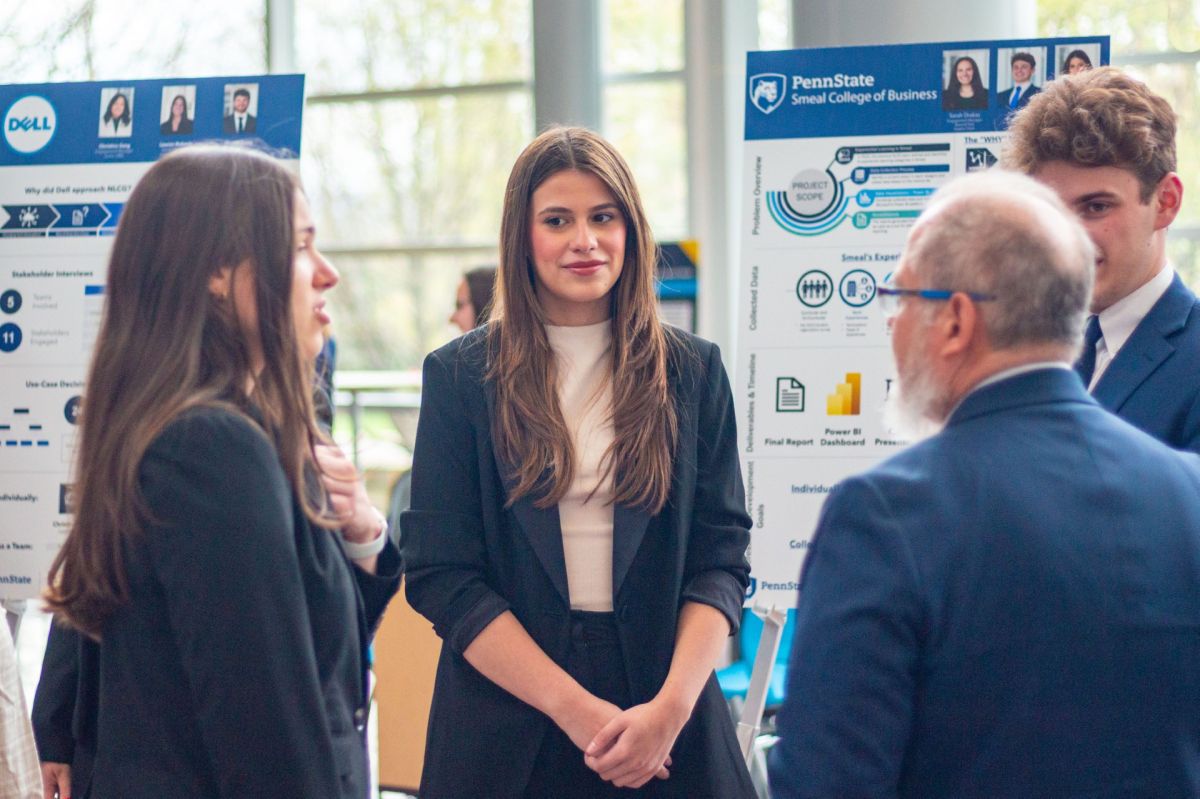
    NLCG showcase |Photo provided 

    In recent years, startups, Fortune 500 companies and nonprofits have come to Penn State’s University Park campus, seeking help to solve industry issues, not from researchers or professors, like you might expect. Instead, these critical insights come from a group of highly motivated students who make up the Nittany Lion Consulting Group (NLCG).  

    Born out of multiple student groups eager for hands-on learning experiences in the management consulting space, NLCG is an exclusive group, requiring students complete a 10-week training program before they can even apply to join, after which they’ll receive three credits per semester. According to the Smeal College of Business’s David Lenze, the faculty director for NLCG, about a hundred students sign up for the training program each semester, about 75 finish the training and then maybe 20–25 students will actually make the cut. Once you’re in, you have to work your way up from the bottom over multiple semesters, starting as an individual contributor on client engagement teams, before applying for higher-up positions as a manager or executive. 

    “It’s pretty selective,” Lenze said, describing the participating students as overachievers who aren’t after the credits for any major or minor, but who simply want to be there, to glean that invaluable experience. 

    As rising Penn State junior Colton Shiry, NLCG’s current vice president of consulting services, said, “The people that are doing NLCG aren’t doing it for the credits. They’re doing it because — and I genuinely say this — I don’t think there’s another space at Penn State that provides this experience. It’s one-of-a-kind…. You’re working with real clients. You’re having real client meetings and you’re seeing some of the projects that you work on actually come to fruition in the real world. That’s why people do it. And the people that do it, they’re passionate about it.” 

    Once in the program, students essentially operate a consulting firm. “They staff, operate and lead,” said Lenze. “They have to run the business. They have to source the new clients, do the HR stuff, do the finance.”  

    NLCG takes clients ranging from startups to small businesses to multi-national companies, most who’re seeking to grow a business in some way or improve upon their processes. Past clients have included Dell, IBM, Johnson & Johnson and more. One NLCG team helped Bollman Hat Company explore how they could incorporate virtual tools such as augmented reality into their operations; another worked with The Rivet in State College to discover the feasibility of creating a new revenue stream through the creation of date night-style events.  

    “I want you to pretend that you’re writing a $10,000 check. What would you expect? That’s where I want you to hold the bar for this team.”

    Clients meet with their faculty-overseen NLCG team over a semester, and during that time, the team works on providing a deliverable that solves a problem for the client — and at no charge to that client. Even though NLCG provides its services for free, Lenze noted that clients should expect a high level of results.  

    He said, “I tell the clients, ‘I want you to pretend that you’re writing a $10,000 check. What would you expect? That’s where I want you to hold the bar for this team. This isn’t like you’re hiring McKinsey or Deloitte, because [the students are] learning — but they’re smart and they’re going to deliver.’”  

    NLCG clients weigh in with their experiences  

    “We are an inexpensive and easy way to tap into some bright folks, and a resource to help with some of the challenges [clients] face as a business.”  

    So how are clients getting their $10,000’s worth?  

    Carl Crider Jr., president and CEO at DelGrosso’s Park and Laguna Splash, said that he was connected with NLCG at just the right time. “We’d been brainstorming various opportunities to increase our attendance and revenue,” he said. “The timing was kind of perfect.”  

    DelGrosso’s partnered with two NLCG teams, one of which worked on researching, analyzing and making recommendations for various revenue generation opportunities, while the other worked on a more specific revenue generator. The process, Crider said, was valuable and rewarding for both sides.  

    Students visit DelGrosso Amusement Park | Photo provided 

    “They put out a lot of ideas and I was very impressed with them,” he added. “I would look at their presentation…how they carried themselves, the professionalism as young as they were — it was really great to see that. I told them, ‘You’re all going to be successful. You’re all going to be great business leaders going forward.’”  

    Bruce Kraselsky, CEO at X-Hab 3D, had a similarly positive experience working with NLCG. He recounted, “The experience was excellent. [They were] really, really smart, young folks, with varying degrees of experience but very quick to catch on… They’re all motivated. They’re all probably at the top of their class…They worked with us on some really difficult subjects and they did a great job.”  

    One project that NLCG worked on for X-Hab 3D required students to examine, from an industry standpoint, how to scale the use of magnesium oxide as an alternative to Portland cement (a material that’s singularly responsible for approximately 9% of the planet’s manmade carbon footprint).   

    “It’s enormous when you try to put your head around it,” said Kraselsky. “One of the reasons we asked [NLCG] to do this was because we’re limited on bandwidth as a startup. I had ideas, but didn’t have time to do it.” By the end of the semester, NLCG had managed to put together a credible base of assumptions and initial financial model that X-Hab 3D can continue to work with moving forward. 

    Prepping students for more than just consulting  

    “[NLCG] stepped up to the plate. They were excited, they were creative and they were just a pleasure to work with.”  

    Of course, benefits to industry clients aside, it’s worth acknowledging the substantial benefits that NLCG provides to its student participants — and while most NLCG students go on to work in consulting roles, Shiry noted that the skills one learns in NLCG are applicable to far more career paths.  

    “In terms of career preparation, [NLCG is] a huge accelerator, but not just for consulting,” he said. “So many people that join NLCG and participate don’t go into consulting. The skills that they’re learning in NLCG are so applicable and transferable to whatever industry people decide to pursue. So, again, while it is hard work and it is time consuming, the value that people are getting from it… I really can’t find anywhere else that you’re getting the same value.” 

    This fall, rising senior Jessica Krieger will work as a director within NLCG and, since she joined the group, she’s worked with clients such as Clark Associates, TEDxPSU and, most recently, the Penn State Center for the Performing Arts. A State College native, Krieger said this project was particularly rewarding, having performed in Eisenhower Auditorium as a child. The project included analyzing ways the Center could update the auditorium to be more conducive to the performing arts and more valuable as a spot for student programming.  

    Like Shiry, Krieger acknowledged that NLCG has given her far more than just hands-on experience in a consulting role. She said, “NLCG has really prepared me for my upcoming internships, as well as recruiting and how to represent myself as a young professional. The professional development sessions that we have…have been really helpful for me to understand how a business runs, why they are the way they are, and we’ve been able to ask really pointed questions about the consulting industry. That kind of small group engagement and discussion has totally transformed my understanding of the business world and really prepared me.” 

    Interested in working with NLCG?  

    Both Crider and Kraselsky say it’s a good choice.  

    “It’s a win-win,” Crider said. “Everything was positive.” 

    Kraselsky added, “[NLCG] stepped up to the plate. They were excited, they were creative and they were just a pleasure to work with.”  

    Lenze concluded, “We want our clients to be people who have real business problems and believe we can help them… We are a resource for businesses, [a resource] that people can tap into [at] a low cost [for] a source of insights and solutions, and a potential pool of talent… We are an inexpensive and easy way to tap into some bright folks, and a resource to help with some of the challenges [clients] face as a business.”  

    NLCG is currently accepting project proposals for Fall 2024 and Spring 2025. Learn more here. 

  • Happy Valley Olympians

    Happy Valley Olympians

    By Maegen Manning

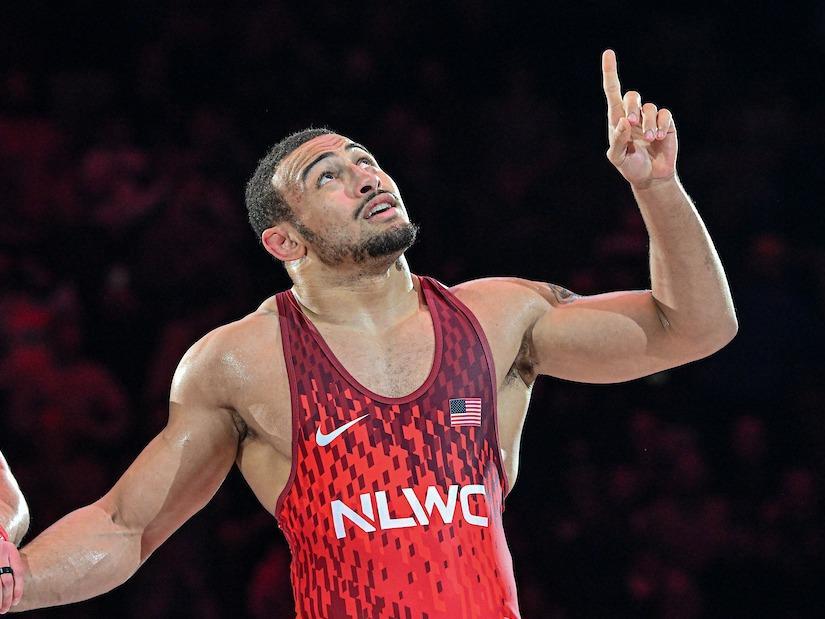
    Credit: Mark Selders | Penn State. Creative Commons

    Many of the athletes competing at the 2024 Summer Olympic Games in Paris are proud Nittany Lions. According to The Daily Collegian, there will be 28 Penn State former and current student-athletes competing at the Olympics across 12 different disciplines. Of those Olympians,18 are part of the Team USA roster. The remaining 10 will represent other countries’ teams. 

    Nine athletes are current Penn State students 

    Athletes Phia Glaudiex (Field Hockey) and Alexis Holmes (Track & Field) are the only two current Penn State students representing Team USA at the Olympics. The other six current students — Mohammed Miset (Men’s Soccer), Eduardo Cisternas (Swimming), Emma Harvey (Swimming), Jack Harvey (Swimming), Cheickna Traore (Track & Field) and Handal Roban (Track & Field) — will all be representing other countries, including Mali, Chile, Bermuda, Ivory Coast and Vincent & the Grenadines. One current student-athlete, Jenny Rizzo (Field Hockey), will serve as an alternate for Team USA.  

    Nineteen athletes are former Penn State students 

    The 15 former Nittany Lions representing Team USA include Margherita Guzzi-Vincenti (Fencing), Miles Chamley-Watson (Fencing), Stephen Nedoroscik (Men’s Gymnastics), Aaron Russell (Men’s Volleyball), Matt Anderson (Men’s Volleyball), Max Holy (Men’s Volleyball), Kayla Canett (Rugby), Joe Kovacs (Track & Field), Alyssa Naeher (Women’s Soccer), Sam Coffey (Women’s Soccer), Ali Frantti (Women’s Volleyball), Haleigh Washington (Women’s Volleyball), Micha Hancock (Women’s Volleyball), Aaron Brooks (Wrestling) and Zain Retherford (Wrestling). 

    The four former Nittany Lions representing other countries — the Philippines, Canada and Mexico — are Samantha Catantan (Fencing), Sam Zakutney (Men’s Gymnastics), Gabe Castaño (Swimming) and Roman Bravo-Young (Wrestling).  

    In all, Penn Staters will represent nine different countries, though Team USA leads with 18 Nittany Lions on the roster. Following, Mexico and Bermuda will each have two Nittany Lions on their teams.