Category: Entrepreneurship

  • New nanny service fills a critical need for Happy Valley families

    New nanny service fills a critical need for Happy Valley families

    By Holly Riddle

    For working parents, childcare is typically non-negotiable. However, for many Happy Valley professionals, finding that childcare is easier said than done — leaving some to wonder if they should forgo their career plans and stay home with the kiddos, while others worry for the futures of their entrepreneurial endeavors.

    “People started warning us about the childcare situation in the area pretty early on,” said Ellen Matis, founder of Hello Social Co. “I was four months pregnant and people said we had to get on a list for daycare.”

    Matis and her husband, Sean Yoder, did put their now-toddler daughter on “many” daycare waitlists, but by the time she was several months old, the couple still hadn’t found a feasible option.

    Top talent in our area, people with really creative ideas, want to run businesses, but can’t because they have to make this choice between their business or their kid. That’s going to have a huge ripple effect on our entire community.

    Hiring a nanny was, for a while, necessary for Christian Baum, founder of GivLocal. At first, Baum and his wife mitigated the risks of sending their son to childcare while Covid-19 cases were still relatively high, by hiring three, in-home nannies. Once they were ready to enroll their son in daycare, they had a spot lined up and then, at the last minute, were told that the spot was no longer available. Finally, after near-endless hassles and frustrations, the two found an opening.

    As for Emma Ostler, who works remotely from her home in Bellefonte for a healthcare company, the hurdles to finding affordable childcare are so great that she and her husband, who also works remotely, have decided to balance childcare and work on their own.

    A potential new solution?

    Ann Walker, executive administrator at the Child Development and Family Council of Centre County, Inc., clarifies that Centre County is not considered a childcare desert, which is defined as “any census tract with more than 50 children under age 5 that contains either no child care providers or so few options that there are more than three times as many children as licensed child care slots.”

    However, Walker does agree that this is an area where parents may struggle to get the care that they need, and it’s often due to staffing issues.

    Of course, without childcare, parents often can’t work. When parents can’t work, economic and business growth is slowed.

    As Matis said, “Top talent in our area, people with really creative ideas, want to run businesses, but can’t because they have to make this choice between their business or their kid. That’s going to have a huge ripple effect on our entire community.”

    There’s nothing like this here, Nittany Nannies is the first and only nanny agency in our area.

    This issue is one that was apparent to Sarah Kuchta, who told HappyValley Industry, “We have five children, so when we had our twins 10 months ago, I realized I needed serious childcare help. I had a very hard time finding nanny options in our area. Finding reliable babysitters in general is hard.”

    Rather than struggle with the issue and try to make things work however possible, though, Kuchta saw an opportunity. She asked herself, “Why not create an agency to solve this problem?”

    In January, Kuchta founded Nittany Nannies Co., a nanny agency based in State College and helping professionals who are also parents find reliable and retainable babysitters.

    Nittany Nannies offers four services: on-demand sitters for date nights and occasional care, on-site sitting for tailgates or at Airbnbs, and both part-time and full-time nannies. Kuchta said her key customers are the many professionals who are also parents in the area and who are, by nature, busy and need that reliable and dependable childcare.

    “There’s nothing like this here,” she added. “Nittany Nannies is the first and only nanny agency in our area. There is a high demand for childcare and always will be. We take the time to listen to the specific needs and preferences for each family. This level of customization is appealing to families in Happy Valley, who value individualized care for their children.”

    In the future, Kuchta hopes to serve families outside of Centre County as well.

  • Pine Grove Hall is thriving with a focus on local and alumni customers

    Pine Grove Hall is thriving with a focus on local and alumni customers

    By Staff Writer

    Liz Grove purchased the historic Old Oak Tavern in Pine Grove Mills in 2019 and opened Pine Grove Hall in June 2020, at the beginning of the pandemic. As she described, it was “the worst possible time to start a new restaurant and live music venue.” With a little creativity and flexibility, though, Pine Grove Hall withstood the pandemic, and is now a thriving spot for dining and live music.

    Grove grew up in Happy Valley, and then spent years working in the music industry in New York. She conceived Pine Grove Hall from a desire to bring something the area perhaps didn’t know was missing.

    She said, “So much of the growth over the last 20 years has been focused on the student population. Locals and alumni retiring here need a place to go to enjoy great food and live music in a more upscale, but still casually comfortable, atmosphere.”

    In addition to attracting locals, Pine Grove Hall is now a popular spot for those visiting during football season and for other big Penn State weekends. Beyond live music, customers enjoy the farm-to-table menu, which is rooted in a deep commitment to strong relationships with local farms. The bar is also popular thanks to unique craft cocktails and a curated wine and beer list that always features selections for pairing with the seasonal menu.

    The future of Pine Grove Hall is bright, according to Grove.

    “We are incredibly optimistic about our future. We needed more parking, so when the lot next door came on the market, we purchased it and did a land development plan to double our parking,” she said. “In addition, we are renovating the house on the lot to make a sister restaurant — Flour and Stone — that will complement the offerings of Pine Grove Hall.”

    Checkout their website here.

  • “The best working years of their lives” at Happy Valley’s West Arete

    “The best working years of their lives” at Happy Valley’s West Arete

    By Holly Riddle 

    More than two decades ago, Scott Woods and his wife Ieva Perkons left their jobs to travel and rock climb full-time. That love and appreciation for outdoor adventure led the couple to State College; however, they weren’t only seeking outdoor fun when making their way to Happy Valley. After the traveling, Woods wanted to start a company and wanted to do so in a way that would afford him a work-life balance, while also providing a proper work-life balance to his team. Happy Valley just so happened to tick all the right boxes.

    Woods explained, “I wanted to start a business and we wanted more balance in our life. Out of all the places we visited — we considered Estes Park; Chattanooga; Bend, Oregon — State College wound up being this really cool balance of amazing outdoor recreation. It’s one of the best places in the country to train for long-distance trailing running…and it’s [a place] where you can grow a business without needing a ton of capital. There’s a really supportive community, really great outdoor recreation and [it’s] just a really wonderful place to live.”

    So, in 2004, Woods founded West Arete, picking the name due to its connections with the climbing world (the arete is the sharp outside edge of a cliff, Woods said), as well as its meaning in Greek: “virtue” and “quality.”

    However, when he first started, Woods admits he didn’t know anything about running a business. The Happy Valley entrepreneurial community and mentorship opportunities were crucial to his success. He joined the CBICC Business Incubator in his first few years and, from there, West Arete grew almost side-by-side with the Happy Valley entrepreneurial ecosystem, as more resources formed and the community grew. West Arete became a Ben Franklin Technology Partners company in 2017 (though Woods mentioned that Todd Erdley, director of Ben Franklin’s central region, was one of his first business mentors after he arrived in State College).

    So what exactly does West Arete do?

    “This is the software that runs universities,” Woods summed up. “We have one type of software that gathers all the research information for entire research universities and brings it together in one place for business intelligence, artificial intelligence and analysis. Another offering brings together all the student information for an entire university. These are the types of software we write… We tackle the really messy problems in higher education. It’s not just about creating a piece of software and marketing and selling it. We work really closely, hand-in-hand with the university on the messy parts of, how are they going to make it work?”

    Software, data, analysis — to the average layperson, it can sound relatively mundane. However, West Arete’s mission is much more personal, and much deeper than just this surface-level understanding of what the company does.

    When asked why exactly this is what he wanted to do, and why this was the type of company he wanted to found, when moving to Happy Valley, Woods said, “Life’s short and you want to spend your working days doing something that really matters, with people that you enjoy being around. The underlying purpose and mission behind West Arete is to give people the best working years of their lives… You have to do work that has a positive impact. Some of the things that we produced [have included] the MIT Living Wage Calculator, which has helped to increase the wages of millions of employees around us. It’s the standard now for what constitutes a living wage in the U.S. We also created software that’s helped with advances in nutrition and curing diseases and improving renewable energy. Higher education provides so many different opportunities for positive impact.”

    We tackle the really messy problems in higher education.

    But don’t make the mistake of thinking West Arete is only about providing those in higher education with the best working years of their lives, with software that makes meaningful, impactful work easier. That ethos heavily plays into West Arete’s internal culture as well.

    Just as Woods’ love for outdoor recreation means he strives for a healthy work-life balance for himself, he makes that balance and a positive work experience a priority for his employees as well. For example, every employee at West Arete enjoys a mandatory, three-week, full-pay annual sabbatical in addition to their vacation time, sick leave and company holidays.

    Woods’ approach to company culture is highly informed by his experience climbing and ultra-running. “It taught me so much about what really motivates people and how you get the highest level of performance from people,” he said. “You have to challenge people and set goals, and there’s a lot of hard work and discipline… But there [is] a sense of adventure, love, support and kindness to it all, too. Everybody really took care of each other and made sure that they were well supported… When I thought about business [and] how do I assemble the most amazing group of people and give them the support to do the best, most challenging work of their lives and have fun while doing it, so much of that revolved around being able to give people space.”

    High-performing professional athletes don’t work all through the year, Woods noted. There’s always an off-season. And when other business owners tell him the sabbaticals are a waste of money, Woods heavily disagrees.

    He said, “When people come back, they are brilliant and they’re fresh and they’re committed. The innovation that we get for it and the retention pays for it several times over.”

    Another element that plays into West Arete’s focus on giving employees purpose and “the best working years of their lives”? The company’s commitment to sustainability. West Arete was one of the first members of 1% for the Planet, donating 1% of its sales to grassroots nonprofit environmental organizations each year. It’s also a Certified B Corporation, meaning the company has met rigorous third-party standards in environmental and social sustainability.

    “There’s so much overlap between creating a sense of purpose and giving people a sense that they’re part of something bigger, that their work is more than just the paycheck. These organizations thread together really well [when] creating a high-performance team,” said Woods.

    The underlying purpose and mission behind West Arete is to give people the best working years of their lives…

    When looking to the future, Woods noted that he’s been deliberately capping West Arete’s growth, so that fast growth doesn’t negatively impact the company’s culture. However, over the next decade, he says West Arete plans “to revolutionize the way that universities collect and understand their own research information.” Woods also recently spun out on a brand-new venture, co-founding a new living wage institute, which works with top Fortune 500 companies to change the way employers think about investing in their people, and create broad change as to what wages look like in America.

    In other words, the future is bright for West Arete, as it seems Woods is doing exactly what he set out to do: making a positive change with purpose, and bringing everyone around him along for the ride. Looking back on his Happy Valley experience, he concluded, “I wouldn’t change a thing.”

    Custom Software for Higher Education | West Arete

  • Advance your company through intrapreneurship: Learn how, at the Penn State Conference on Intrapreneurship

    Advance your company through intrapreneurship: Learn how, at the Penn State Conference on Intrapreneurship

    By Holly Riddle

    It’s no secret that Penn State is changing the world, solving one problem at a time (just check out what the Huck Institutes is up to, in our recent coverage), but it’s not just Penn State research that’s making a difference. More and more, through initiatives, events and organizations like Happy Valley LaunchBox and Startup Week, the university is encouraging students and community members alike to solve the world’s problems via entrepreneurialism.

    That said, not everyone’s cut out for the entrepreneur life — which is where intrapreneurship comes in. Intrapreneurship poses the idea that smart, innovative changemakers don’t need to launch their own businesses in order to make a difference. They can do so within the structure and support of traditional employment. With intrapreneurship, changemakers enjoy a safe space in which to innovate, and employers reap the benefits of hiring top talent who can bring new solutions, new products and new opportunities to their teams.

    Intrigued? You’ll want to register for the upcoming Penn State Conference on Intrapreneurship, May 8–9.

    Presented by the Penn State College of Engineering’s School of Engineering Design and Innovation, and the Engineering Entrepreneurship Program, the annual conference brings together employers for networking, education and insights, all centered around intrapreneurship.

    According to Frank Koe, event organizer and professor of engineering entrepreneurship at Penn State, “This year’s Conference on Intrapreneurship will focus on intrapreneurial leadership and emphasize ways to guide employees who wish to make a difference in their company by becoming innovators. Questions such as, how does intrapreneurship work and why it is an important concept to embrace and manage will be addressed. Intrapreneurship underscores the point that everyone has something valid to offer. A new leadership style is needed to manage how the best in everyone can be brought out and used to advance companies.”

    Ben Stapelfeld, chairman and co-founder of New Pig Corporation will be the conference’s keynote speaker for 2024. New Pig is an international leader in preventing and mitigating leaks and spills, and Stapelfeld has helped lead the company for nearly 40 years.

    “If you’re about innovation and looking for an exciting approach to conducting and growing a business, this conference is for you!” said Koe. “The number of participants for this year’s conference will be held to 100, so early registration is encouraged. In order to be true to the idea of intrapreneurship, it’s important to keep the conference small, so everyone has an opportunity to participate and be heard. You, the participant, are central to making the conference a success!”

    The free event kicks off with a networking event hosted by the Centre Region Entrepreneurs Network (CREN), Wed., May 8, 6–8 p.m. in the Eric J. Barron Innovation Hub Lobby. Then, the conference takes place Thursday, May 9, 8 a.m.–5 p.m., also in the Eric J. Barron Innovation Hub. Continental breakfast and lunch will be provided.

    Register and reserve your spot now, here.


  • Accelerate Trust and Sales with Education-Based Marketing: A Strategic Guide

    Accelerate Trust and Sales with Education-Based Marketing: A Strategic Guide

    By Staff Writer

    Did you know that only around 10% of your audience is actively looking to make a purchase? The remaining 90% may not be considering a purchase yet. Education-based marketing bridges this gap by providing valuable information about their buying decisions. By teaching prospects something valuable, you attract interest and, in turn, gain credibility as an expert. This sets the stage to seamlessly introduce your services or solutions.

    The secret to expediting this process? Education-based marketing. HappyValley Industry is built on the core belief that education-based marketing works to attract stakeholders and convert them into leads, customers, even top talent and donors, with the right message.

    We’ve broken down the concept we use here. Whether providing a sales support strategy or supporting a non-profit organization in raising important funds, education-based is an effective, long-term strategy for building community with your audience and gaining their trust.

    Teach, Don’t Sell

    Instead of focusing solely on selling your products or services, provide valuable educational content to your audience. Use bold storytelling to position yourself as an expert who shares knowledge and insights that benefit your target market. Make your prospects part of your community.

    Build Trust and Credibility

    Education-based marketing is not just about selling; it’s about building trust and credibility over time. Consistently delivering valuable content establishes your reputation as a reliable source of information. Use personalization so your prospects know you know them and their unique problems.

    Consistency is Key

    Be consistent in your educational efforts. Regularly share insights, updates, and educational content to stay top-of-mind with your audience.

    Content Marketing

    Develop high-quality content, such as blog posts, articles, and videos, that educates your audience. Share actionable tips, case studies, and industry trends to demonstrate your knowledge.

    Positioning as an Authority

    Establish yourself as an authority figure by contributing articles to industry publications or speaking at conferences. Leverage social media to share your expertise and engage with your audience.

    Address Customer Pain Points

    Identify the pain points and challenges your customers face, and tailor your educational content to address those issues. Show measurable proof that your products or services can provide solutions to these challenges.

    Email Marketing with Value

    Use email marketing campaigns to deliver educational content directly to your audience. Provide valuable insights, tips, and resources that genuinely help your subscribers. According to Flodesk, email marketing promises the highest ROI of all marketing channels, earning an average of $42 back for every dollar spent. Their analysis of over 6.4 billion emails found an average open rate of 46.32% and an average click-through rate of 1.94%. Data showed the highest open rates on Fridays and better performance with emails using segmentation.

    Other ideas:

    Educational Webinars and Workshops

    Host webinars, workshops, or seminars that offer in-depth insights into relevant topics within your industry. Use these events to showcase your expertise and build trust with potential customers.

    White Papers and Reports

    Create in-depth white papers or reports that address key challenges or trends in your industry. Distribute these materials to your target audience, positioning your business as a thought leader.

    Free Information

    Offer free resources, such as ebooks, guides, or downloadable resources, that provide valuable information to your audience. Use these materials to capture leads and nurture relationships with potential customers.

    When you educate a prospect, you go beyond selling a solution – you offer a greater value by elevating their knowledge, making them experts in areas critical to their business and professional success. Your expertise, backed by data, becomes a core part of the story illustrating how your product or service is a solution.

    Have you incorporated education-based marketing into your sales strategy? If so, how has it worked for you? If not, what’s holding you back? Not seeing how education-based marketing can fit into your sales strategy? Tell us why in the comments.

    _____

    HappyValley Industry leverages education-based marketing, showcasing solutions for local businesses through compelling, educational stories. If you are not using education-based marketing in your sales process, explore how joining HappyValley Industry’s co-op can seamlessly integrate this strategic approach with you. Click here to sign up for more information about education-based marketing and take the first step toward becoming a trusted advisor in your industry.

  • Unleash Your Business Potential: The Power of Authentic Storytelling

    Unleash Your Business Potential: The Power of Authentic Storytelling

    By Erik Evans

    In an article from the Harvard Business Review Titled Storytelling that Moves People, “Most executives struggle to communicate, let alone inspire. Too often, they get lost in the accoutrements of company speak: PowerPoint slides, dry memos, and hyperbolic missives from the corporate communications departments. Even the most carefully researched and considered efforts are routinely greeted with cynicism, lassitude, or outright dismissal (HBR Fryer, 2003).”

    “The most powerful person in the world is the storytelling. The storyteller sets the vision, values and agenda of the entire generation that is to come.” – Steve Jobs

    “Marketing is no longer about the stuff you make but about the stories you tell.” – Seth Godin

    WHY STORYTELLING? Nothing sticks in your head or tugs at your heart better than a good story. Done right, storytelling can help you form a deeper connection with your audience and drive results for your marketing efforts.

    Here are some easy-to-follow tips that we follow at Affinity Connection in our story telling for clients. 

    • Making sure you know your audience and can reach them
    • Discovering what your audience believes and cares about
    • Why point of view matters for telling a story with impact
    • How to lead with emotion and support with rational thinking
    • Real-world evidence that storytelling works. Most importantly, you’ll learn that YOUR role is to be the guide in the story, not the hero.

    You started a business to solve a pain point for a customer. Solving problems is the core value at the start of every business.

    The traditional corporate spiel fails to inspire; instead, embrace the power of authentic storytelling. As Harvard Business Review notes, persuasion is key in business, and storytelling is its centerpiece. (HBR Fryer, 2003).”

    Think about your favorite story and why it is so captivating to you. There was a balance, followed by a conflict and a series of antagonists, and ultimately a resolution. Throughout the story, there was a great deal of suspense which motivated you to continue to give your attention.

    Cinema successes ranging from: Forrest Gump, Monty Python and the Holy Grail, Toy Story, and more alike have all followed this pattern. If there was no conflict and the movie began at the resolution, there would be no point in watching them because there was no story. “All of these films came from students of Robert McKee, a University of Michigan graduate and one of the world’s most well-known and esteemed screenwriting lecturers (HBR Fryer, 2003).”

    It is no secret that enthralling stories are the key to enchanting an audience. If you want the attention of your audience, persuade them. This does not mean manipulation, it means genuinely sparking their interest into why your company exists, why you solve problems, how you solve those problems, and how you can solve a problem that they are currently facing.

    Happy Valley Industry implements storytelling as the heart of our business. HappyValley Industry wants to share your company story and amplify your genuine value to your stakeholders.

    Do you want to be part of this regional co-op to amplify the problems you are solving? Do you want to start by answering this 2-minute survey?   Want us to tell your story on the drama of your story and how you are solving problems for customers?

    We want to know your 2023 highlights, hopes, dreams, and goals for 2024. Give us your best moments and what you’re looking forward to in the New Year. Please consider taking this short 2-minute survey.

  • Not just another ChatGPT

    Not just another ChatGPT

    By Holly Riddle 

    As anyone who’s ever searched for a job or internship knows, finding available jobs that align with your needs and experience and then applying to those jobs is like a job in of itself. It’s a time-consuming, lengthy, often frustrating process. However, a group of Penn State students and a new business are aiming to change that.

    Rady said that users on average save 4–5 hours of time during the application process, when applying to jobs using OfferPilot compared to other methods

    Omar Rady is one of the co-founders of OfferPilot, an AI-powered platform that helps fellow students find internships and jobs from around the internet, compiling them in one place. From there, the platform can help applicants put together a custom, personalized application package, with a just a few seconds and a few clicks, for their best chances at scoring an interview.

    OfferPilot got its start after Rady and team participated in Penn State’s HackPSU competition, during which, over 24 hours, they built an application to help students become better presenters, with an interview preparation tool that, Rady said, gained a lot of interest.

    He said, “We decided to go further with it. We did a lot of research and talked with a lot of college students about what they needed. We came to the conclusion that one of the biggest priorities for college students is being able to present themselves well and get as many career opportunities as possible…We decided to restructure the tool in a way that helps students maximize their chances for internships.”

    Mostly recently, OfferPilot participated in the Penn State Nittany AI Challenge, winning first place and $15,000 in funding. Today, the platform is live and accessible to anyone, offering six tools to help users land a job. There are tools that help users upgrade and personalize resumes; create a resume from scratch; tailor cover letters to job applications; and provide a personalized job feed based on how likely a user is qualified for a job. It all adds up to massive time savings. Rady said that users on average save 4–5 hours of time during the application process, when applying to jobs using OfferPilot compared to other methods.

    But why use OfferPilot versus another AI tool that’s open to the public, like ChatGPT? According to Rady, the reasons are myriad. For example, ChatGPT requires a learning curve, can’t format your resume on your behalf, doesn’t automatically help you make best-in-practice resume decisions and provides a lot of inaccurate information.

    We want to see Penn State [students] prosper and more people go to higher-ranking positions at bigger companies. We really want to see the Penn State student body use this to improve and gain a competitive edge

    Rady noted that, when creating the platform, he and his fellow co-founders had a certain edge that not all entrepreneurs can claim. They’re not just the creators of OfferPilot, they’re the intended users, too.

    “We’re solving our own problem,” he explained. “We wanted to make something that solved our own problem first and, from there, other people’s problems. That was one of the main reasons we were able to keep going. Each time we took a step, we were able to apply [the work] to our context and see better results…. Now, we’re able to help ourselves and help our peers. It’s by college students, for college students.”

    So what do those college students have to say about OfferPilot?

    According to user Ryan Jai Hokimi, a junior studying computer science at Penn State, as well as the vice president of the Nittany AI Student Society and the student liaison for the Nittany AI Alliance, OfferPilot has changed the way that he’s applied to internships and helped him secure multiple interviews that he doesn’t know he’d necessarily have secured otherwise.

    He said, “As a comp sci student, you set a high standard for yourself…and it’s very frustrating when you can’t land an internship simply because there are too many applicants for these positions. You don’t get a fair chance to talk with companies and meet them. You try to compensate for that by applying to a million internships from tons of companies and it takes a lot of time; it honestly counts as an extracurricular activity. Having OfferPilot speed that up by building tailored resumes and cover letters… I get the personalization I want with every company, but without having to spend the time.”

    Overall, Jai Hokimi felt that his applications were of a higher quality when using OfferPilot, and that he discovered job opportunities more quickly.

    Looking to the future, Rady and team plan to continue improving the platform with one particular end goal in sight. He said, “We want to see Penn State [students] prosper and more people go to higher-ranking positions at bigger companies. We really want to see the Penn State student body use this to improve and gain a competitive edge.”

    Learn more about OfferPilot at https://offerpilot.ai.

  • Central PA SCORE chapter helping local small businesses thrive

    Central PA SCORE chapter helping local small businesses thrive

    By Mary Elder

    SCORE is made up of working and retired individuals with a range of skills and strong entrepreneurial backgrounds. Since 1964, nationally, SCORE has helped more than 11 million entrepreneurs start, grow, or successfully exit a business.

    SCORE’s mission is to foster vibrant small business communities through mentorships and education and the local Central PA chapter, which serves Centre, Clarion, Clearfield, Clinton, Crawford, Erie, Forest, Huntingdon, Jefferson, Lycoming, Mercer, Mifflin, Warren, and Venango Counties, attracts bright and engaging mentors from a variety of fields. While the local SCORE chapter goes by SCORE Central PA, the territory expanded to include surrounding counties to the north and west.

    Locally, 28 individuals with expertise in finance, engineering, operations and more, volunteer, using comprised of men and women who have worked in a variety of for profit and non-profit businesses and academia who aim to use their unique experiences to benefit others. SCORE Central PA has a diverse portfolio of members with expertise in engineering, operations, law, finance and more. Non-profits are also eligible for mentoring support.

    During the last fiscal year, SCORE Central PA’s mentors conducted over 450 mentoring

    sessions with clients, an increase of 62% over the previous year. SCORE Central PA has also welcomed local guest speakers, including Elizabeth Hay, Happy Valley LaunchBox; Amy Frank, The Makery; Kathy Fisher, Kathryn’s; Emily Aten Newberry, Above & Beyond Speech Therapy; Tatiana Polay, The Cake Shop by Tati; and Saleemah Williams, Avail.

    Mentoring provides a way for retired professionals and business owners to stay engaged with a variety of different business activities. For others, it is a way to share their passion for business and give back to their community.

    SCORE currently helps 15 – 20 clients per month, taking a personalized approach to their goals. Engagements can be as brief as a session or two, but in other cases engagements span many sessions over several months and, occasionally, more than a year.

    SCORE Central PA is part of the Western PA District and was named the “District’s Chapter of the Year in 2023”. To learn more about how you can get involved with SCORE Central PA, go to https://www.score.org/centralpa.

  • Penn State students on the future of work

    Penn State students on the future of work

    Photo Credit: Penn State University

    By Holly Riddle

    It used to be all about millennials. They ate too much avocado toast. They needed participation trophies. Helicopter parents made them aimless. Now, Gen Z adults, those under 26, are both up-and-coming college graduates and the newest members of the workforce. They’re supposedly switching up office speak and email lingo, looking for employers with values, and have their own ideas about what success looks like.

    We wanted some first-hand knowledge about Gen Z and their relationships with work. Here’s what both local career services experts who work with students and the students themselves had to say.

    “It’s all relative”

    According to Dr. Katharine Staley, Ph.D., a Happy Valley-based licensed clinical psychologist and the founder of River Rocks Consulting, “[Gen Z is framed] as not willing to work as hard, but I don’t think that’s true. I don’t think they’re willing to work without adequate compensation… but I think they are incredibly hard workers and are willing to work hard as long as the benefits are really salient to them — and that’s what employers need to get their heads around. That old model of ‘I gave you a job, you’re lucky to have it, you’ll work hard two years and get a small raise’ is just that — an old model.’”

    Ashley Rippey, executive director of the business career center in the Smeal College of Business at Penn State, further pointed out that, often, many of the challenges that older generations have with newer generations in the workplace are a matter of relativity. In her role, Rippey works with undergraduate and graduate business students at Penn State, providing career-focused resources that range from networking events to interview training.
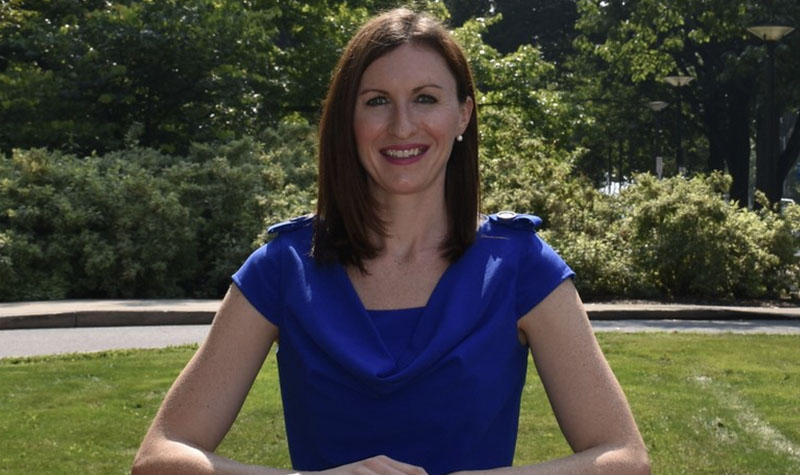
    Ashley Rippey, executive director of the business career center in the Smeal College of Business

    She said, “Today’s Boomers in the workplace would say that they had different perspectives from the folks who were 30 or 40 years older than them when they started working. It’s all relative, and this is going to continue. Today’s Gen Zs, 40 years from now, will have different work and communication styles than the people who are younger than them. That’s why intergenerational communication and education is so important — getting to know people without judgment and having authentic work conversations.”

    Gen Z workplace priorities

    So what are Gen Z’s most pressing priorities in the workplace, that might be different from what their parents and grandparents wanted? Both Rippey and Staley pointed to a few overlapping factors, including proper compensation and livable wages. However, Rippey noted that, from her experience, compensation doesn’t take top priority.

    I think they are incredibly hard workers and are willing to work hard as long as the benefits are really salient to them — and that’s what employers need to get their heads around. That old model of ‘I gave you a job, you’re lucky to have it, you’ll work hard two years and get a small raise’ is just that — an old model.

    She said, “I’ve now been here nine and a half years and, when I first started, when students had multiple offers and we were trying to dissect how they were going to pick offer A over B, over C, salary tended to be the number one priority. Oftentimes, honestly, they weren’t really able to see that $80,000 in New York City wasn’t as good as $70,000 in Charlotte. They were focused on the number. They’re not really focused on the numbers so much anymore. Yes, they want to survive, but now, what tends to be more important is purposeful and meaningful work. Students are very focused on DEI and sustainability ethics.”

    Sue Chappell, associate director of career services at Penn State, likewise explained that, when looking at the latest National Association of Colleges and Employers (NACE) data from surveying Penn State students, the results are much the same. She said the NACE survey asked students to rank what they were looking for in a job by what was most important to them, and things that came out on top included friendly coworkers, job security and career development opportunities — but that salary didn’t even make the top 10.

    Sue Chappell, associate director of career services at Penn State

    She said, “Salary is important, but [students’] work-life balance and the opportunity to be in an environment that feels authentic to them is ranked higher.”

    They’re not really focused on the numbers so much anymore. Yes, they want to survive, but now, what tends to be more important is purposeful and meaningful work. Students are very focused on DEI and sustainability ethics.

    Both Rippey and Staley likewise also mentioned flexibility, work-life balance and mental health as factors that Gen Z considers during a job hunt — factors that research has shown overlap.

    Student perspectives

    Research and survey data aside, what do Gen Z Penn Staters who are about to enter the workplace say they’re looking for when they decide to accept or not accept, or even apply?

    “The first thing I want is the ability to learn,” said Sanjana Devarakonda, a third-year finance major at Penn State. “I don’t want a job … where you keep doing the same thing day in and day out with no change in what you’re learning or doing. I want a job where the work is fluid and I’m able to learn a lot in a short amount of time.”

    Salary is important, but [students’] work-life balance and the opportunity to be in an environment that feels authentic to them is ranked higher.

    “The second thing is flexibility,” she added. “Hybrid is my preference, but I’m totally fine if it’s in-person, as long as [the employer] is willing to work with you and realizes you’re a person outside of your work.”

    Anika Sinha, a senior econ and psych major at Penn State, said something similar about the importance of employers recognizing an employee’s existence beyond the workplace. It’s part of  why she decided to accept a post-graduation role at PwC in New York City, following an internship with PwC over the summer.

    Anika Sinha, senior econ and psych major at Penn State

    She said, “I found that, in a lot of industries and in a lot of companies, it’s not necessarily the case that they value your health outside of work, especially as a first-year analyst/associate. Working in the financial sector can come with working long hours each day; however, while there are some days and weeks that you do have to work a lot, even in my experience this summer, I saw that PwC tries its best to make sure that you’re doing well, mentally and physically. Just your health in general is very important. I found that really important to me, and that that was the type of community I wanted to be a part of.”

    What are the red flags that show Gen Z-ers that a job might not be a great fit?

    The second thing is flexibility,” she added. “Hybrid is my preference, but I’m totally fine if it’s in-person, as long as [the employer] is willing to work with you and realizes you’re a person outside of your work.

    Student Gabrielle Sabatini, who plans to pursue a career in wealth management near Washington, D.C., post-graduation, said, “If the conversations are very forceful in the interview, it shows me that my personality may not fit well with the other employees there. It would also be a red flag if people do not treat you fairly, even though you are the new employee.”

    She added, “[Employers] need to be able to take notes from all levels of employees and not treat the company like a hierarchy.”

    Devarakonda also mentioned the need for authentic DEI efforts, saying, “I’m an Indian woman, and a lot of times, I see companies talk about diversity, but it turns into tokenism. There’s a huge difference between companies embracing diversity and wanting to help people who are diverse, as opposed to saying [they’re diverse] because that’s a trend right now. I’ve gotten pretty good at picking up on what’s really diverse and what’s not.”

    How employers stand to benefit

    Our interviewees believe that making adjustments for Gen Z will give employers an edge over the competition and may benefit every generation in the process.

    Chappell said, “Savvy recruiters … are getting a generation really dedicated to being inclusive and seeking out equity, both during their time as undergrads, but certainly as they step into the workplace. That is a tremendous value to employers. They’re also extremely innovative and entrepreneurial — I think the most entrepreneurial generation that I have encountered during my time in higher ed. That, too, is a wonderful thing for employers to bring into their workforce. They’re not afraid to think outside of the box.”

    Devarakonda and Sinha mentioned their generation’s open-mindedness, responsibility toward the environment and marginalized groups, adaptability, tech-savviness and empathy as benefits.

    There’s a huge difference between companies embracing diversity and wanting to help people who are diverse, as opposed to saying [they’re diverse] because that’s a trend right now.

    So, how can you attract Gen Z talent to your team?

    Rippey said, “The employers who find that they’re successful in hiring and retaining [Gen Z] talent are the ones who are really transparent, not just about their [recruiting] process, but about what it’s like to work at that company. They have a lot of support resources in place for employees, and they talk about those as much as they talk about salary.”

    Chappell likewise noted the importance of transparency during the recruiting process, noting how Gen Z interviewees prefer in-person recruitment if possible, and virtual interviews as a second-best. She said, “It matters to them that employers are making the effort to get to know them and… engage with them.”

    Staley recommended, “If employers do want to cater to Gen Z-ers… pay attention to mental health needs and wellbeing. Honor that and have a really good employee assistance program, with, say, 10 free therapy sessions. Those are the types of things that Gen Z-ers would look for and consider a plus.”