Author: Gracie Mullan

  • What’s next for The Nittany Lion Inn and The Penn Stater

    What’s next for The Nittany Lion Inn and The Penn Stater

    By Gracie Mullan

    In the last 10 years in Downtown State College, two new hotels have opened, another refurbished, and another closed.  That’s quite a lot of change for the region in a short time.

    The Hyatt Place opened in 2017 inside the Fraser Centre and the renovated and renamed Graduate Hotel followed suit shortly after when it opened in 2020. The Glennland Building was transformed into The Scholar Hotel in 2021. The Days Inn Hotel was closed in 2022 to accommodate more student housing.

    According to Dave Gerdes, the vice president of sales and marketing at the Happy Valley Adventure Bureau, visitors to the area have grown from 4.4 million per year in 2019 to 4.8 million in 2022. This increase is partly due to the quality and full service newer and renovated hotels provide, something the area did not have a lot of beforehand.

    “We expect to have a record area hotel performance in 2023 and become a billion-dollar industry by 2025, attracting over 5 million visitors and employing more than 7,000 people,” said Gerdes.

    “Area tourism is hot,” he added. “Visitors love Happy Valley. Based on the current hotel ‘pipeline’ we could have a 30% increase in supply by 2028, which supports the Happy Valley Adventure Bureau and Happy Valley Sports & Entertainment Alliance’s efforts in creating a year-round destination attracting more visitors from around the country and world.”

    The Scholar

    One of the most notable entrepreneurs and figures in the hospitality industry at State College is Gary Brandeis, the founder and CEO of the Scholar Hotels. Scholar owns and operates both the Hyatt Place and The Scholar downtown, and just recently in 2023, they have taken up the challenge of renovating both the Nittany Lion Inn and the Penn Stater Hotel.

    As a graduate of Penn State with a B.S. in accounting from the Smeal College of Business, Brandeis originally worked as a public accountant and became fascinated by real estate as he had many real estate clients. From there, Brandeis decided to pursue real estate alongside accounting and eventually created Real Estate Capital Management LLC in 2005. Brandeis acquired his first hotel in 2006 and decided to fully pursue the hospitality industry after the success of the Hyatt Place – State College.

    We expect to have a record area hotel performance in 2023 and become a billion-dollar industry by 2025, attracting over 5 million visitors and employing more than 7,000 people.

    Outside of his hotel business, Brandeis also volunteers with professors on the University Park campus to give lectures on real estate and hospitality with a real-world perspective.

    The Hyatt Place project — the first new hotel downtown in over 30 years — inspired Brandeis to create the Scholar Hotels, which is tailored to the development of hotels on or near major college campuses.

    “What we saw during the project were the benefits of owning and operating a hotel that is close to a major college campus. The consistent, reliable demand driven by a university is a game changer for the hotel business that doesn’t happen in many places,” said Brandeis.

    Scholar Hotels also operates hotels in Syracuse, New York and at West Virginia University in Morgantown, with three other college town projects in the works.

    “It’s a business where we feel we have a much bigger hand in creating value. That’s why we were so attracted to hospitality,” said Brandeis.
    Giving new life to historical staples

    Scholar Hotels was selected as the buyer of the Penn Stater Hotel and Nittany Lion Inn after a long RFP process with Penn State which finalized negotiations in March 2023.

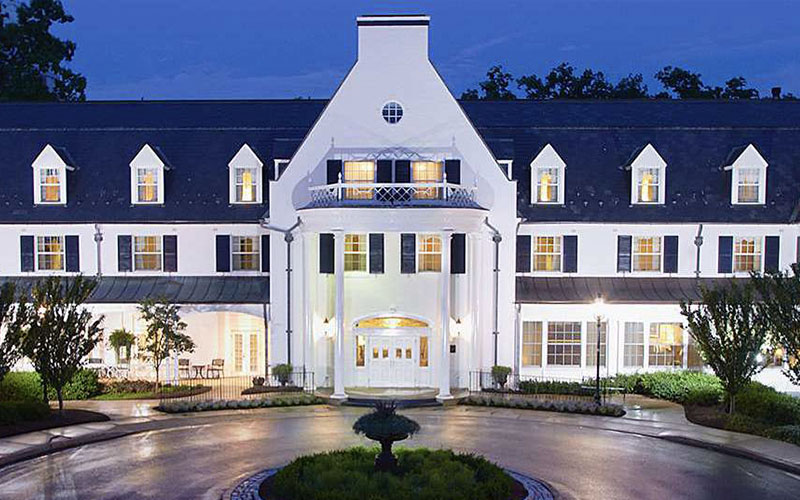
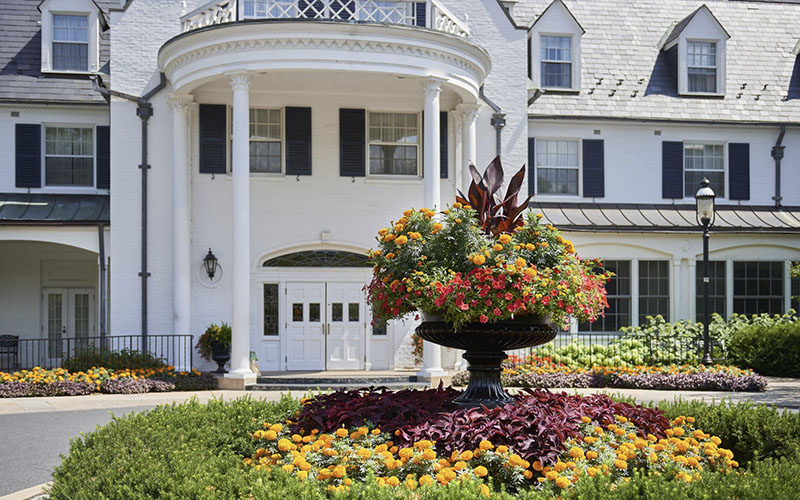
    The Nittany Lion Inn, whose earliest part was was built in 1931, will undergo complete interior renovations. Construction started on June 1 and is projected to continue through August 2024. The Penn Stater, which is slated to remain open for the duration, will see interior upgrades and renovations after the Nittany Lion Inn is complete.

    “It is absolutely crucial that we retain the history and keep spirit of the Nittany Lion Inn alive,” said Brandeis. “I think the Nittany Lion Inn is the second most important building on campus after Old Main. When you look at the history of the Nittany Lion Inn, the importance of the building to Penn State , the State College community, alumni, administration and ultimately a new audience that will be attracted to the Hotel due to the quality of the renovations, it is very important that we retain the historical aspects of the building but make it new, modern and convenient.”

    “When we complete the renovations, , the Hotel will look the same from the outside,” said Brandeis.

    I think the Nittany Lion Inn is the second most important building on campus after Old Main.

    The lobby and common areas inside the building are one of the primary focuses of renovations. The spaces will be a lot more open and welcoming to the community.

    “We are opening it up the common areas and bringing a lot of natural light into the building. Also, upgrading the food and beverage areas inside the building is an important part of reimaging the hotel. In addition to the two existing spaces , our plan includes an additional two – a café and lounge that is connected to the formal restaurant.  We want the hotel to again be Penn State’s Living Room”  said Brandeis.

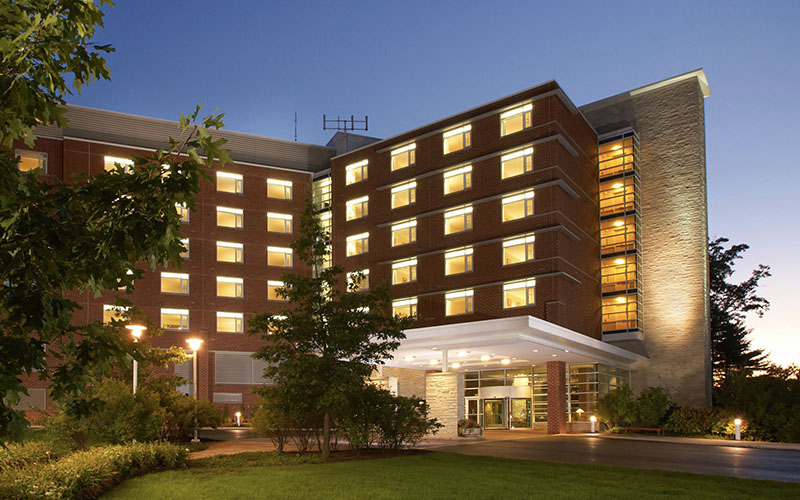
    The Penn Stater Hotel is much younger than the Nittany Lion Inn, having finished its second phase of construction in the early 2000s. The renovations done to the Penn Stater will be more of a refresh compared to the renovations done to the Nittany Lion Inn.

    According to Brandeis, guest bathrooms, flooring, furniture, fixtures, food & beverage options, wall coverings, and lighting will be the primary focus for renovations in the Penn Stater.
    For the love of college towns

    The focus of the Scholar Hotels are large universities in smaller communities where the university is the dominant economic driver according to Brandeis. The amount of demand generated each year by major universities is vital for the hospitality industry in these college towns.

    Penn State alone receives over 100,000 student applications each year. If even a fraction of these applicants visit State College for one night, this equates to a substantial amount of demand. This obviously doesn’t include all of the other facets of Penn State that create demand for hotel rooms, conference and meeting space as well as food and beverage.

    “Hotel offerings in the State College market will be much improved by 2025 to 2026,” said Brandeis.

    “The hospitality business is about creating great experiences for your customers,” said Brandeis. “We are so fortunate to have such amazing properties in a variety of forms  in State College and our goals will always be to create these experiences for everyone that we are privileged to serve.”
  • Lee Industries generating new jobs and economic growth for Moshannon Valley region

    Lee Industries generating new jobs and economic growth for Moshannon Valley region

    By Gracie Mullan

    Image: Uncovering PA

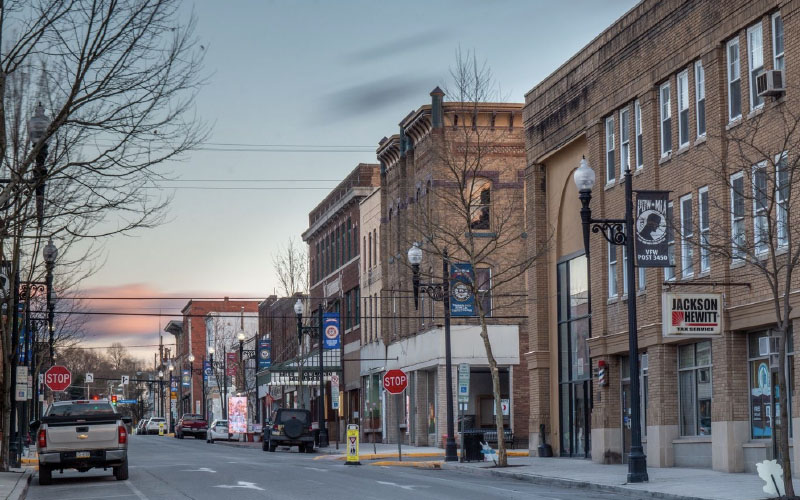
    Philipsburg, Centre County, is getting a makeover.

    Lee Industries President Joshua Montler purchased four properties in downtown Philipsburg as part of the ongoing effort to continue diversifying the region’s economy, which once relied heavily on coal mining. In addition to Lee Industries, a Walmart Distribution Center, PMG Pennsylvania Corporation and Drucker Diagnostics are a few of the companies that have become part of the community, bringing over 2,000 jobs to the Philipsburg area.

    The MVEDP has always been here to help entrepreneurs, existing businesses and businesses interested in setting up shop here. We have the tools for development: building space, loan programs, land, and a great workforce.

    The Borough of Philipsburg recently acquired and demolished four properties downtown that had become eyesores in the community adjacent to Lee Industries, a manufacturer of stainless steel and alloy processing equipment.

    The Borough cleared approximately four acres of land to be acquired by the Moshannon Valley Economic Development Partnership (MVEDP), a non-profit economic development office focused on providing resources to businesses in the region. The acquisition, per state and local codes, allows the Borough to work with an economic development office to facilitate the sale of properties to private companies. In this case, Lee Industries.

    Lee Industries purchased the properties in July from MVEDP. The properties will be transformed into business spaces for Lee Industries with an emphasis on making them aesthetically pleasing for the surrounding community. Construction will begin later this year.

    The improvements will not only improve the value of Lee Industries by providing a welcoming exterior to domestic and international clients, but to Philipsburg as well. This land makeover is only a small part of what MVEDP is contributing to the region economically. According to Stan LaFuria, the executive director of MVEDP, up to 20 job opportunities have been created by the company, strengthening the Philipsburg Borough and the Moshannon Valley region.

    “The MVEDP has always been here to help entrepreneurs, existing businesses and businesses interested in setting up shop here,” said LaFuria.

    “We have the tools for development: building space, loan programs, land, and a great workforce. We are looking to develop some additional land into a new business park, for additional development, but this takes time and money. Having ready-to-go sites available is critical to future development efforts,” he said.

  • Sensor Networks joins the Previan Group, enabling higher growth rates for their sensor technology

    Sensor Networks joins the Previan Group, enabling higher growth rates for their sensor technology

    By Gracie Mullan

    Image: Sensor Networks

    In June, Sensor Networks announced that the team will be joining the Previan Group, a private industrial technology company, with all of Sensor Networks’ NDT technology powered through the Eddyfi Technologies business unit.

    Sensor Networks was founded in 2014 in Happy Valley as a tech company focused on creating ultrasonic non-destructive (NDT) sensors and systems for remote non-intrusive corrosion monitoring in the energy, aerospace, petrochemical and power generation industries.

    Happy Valley was a great place for our Fortune 500 customers to come to and visit us.  Easy access, good hotels and restaurants. The Penn State graduate talent pool also helped us onboard qualified and educated engineers, practitioners and more. There are also many great suppliers and contractors in the area.

    The Previan Group is based in Quebec, Canada, and focused on advanced diagnostic technology to monitor infrastructure around the world. The company assists engineering companies, service companies and more by providing sensor technology to assess the condition of infrastructure. As Sensor Networks joins Previan, the sensor technology they created in Happy Valley will be implemented and used globally.

    To learn more about Previan’s newest acquisition, we sat down with Bruce Pelligrino, the former vice president of marketing at Sensor Networks, to get an insider look at what’s next.

    Image: Sensor Networks

    What does this mean for Sensor Networks?

    “Being a part of the Previan Group will enable faster and higher growth rates. More business traffic will allow us to expand by hiring more engineers, assemblers and machine shop employees.”

    What is Sensor Network’s specialty?

    “Our specialty is non-destructive testing (NDT) products and remote monitoring sensors for accurate corrosion trending.”

    How do the sensors and probes help customers? What do they do?

    “Our technology accurately measures, tests and inspects the customer’s components for fitness or suitability for service.”

    How will the Previan Group provide more growth opportunities for Sensor Networks?

    “Previan has several big product lines that will benefit from the integration of SNI’s ultrasonic transducer offering. Also, Previan has a much bigger global presence than SNI which will allow us to leverage sales, marketing and customer support.”

    “Their Eddyfi subsidiary has very deep technical expertise and know-how in the nuclear, military and energy market segments which will also greatly help us network and create new connections.”

    How did Happy Valley’s ecosystem fuel growth for Sensor Networks?

    “Happy Valley was a great place for our Fortune 500 customers to come to and visit us.  Easy access, good hotels and restaurants. The Penn State graduate talent pool also helped us onboard qualified and educated engineers, practitioners and more. There are also many great suppliers and contractors in the area.”

  • Penn State-created LionGlass will cut carbon emissions in half, create energy-efficient options

    Penn State-created LionGlass will cut carbon emissions in half, create energy-efficient options

    By Gracie Mullan

    Image: Adrienne Berard / Penn State

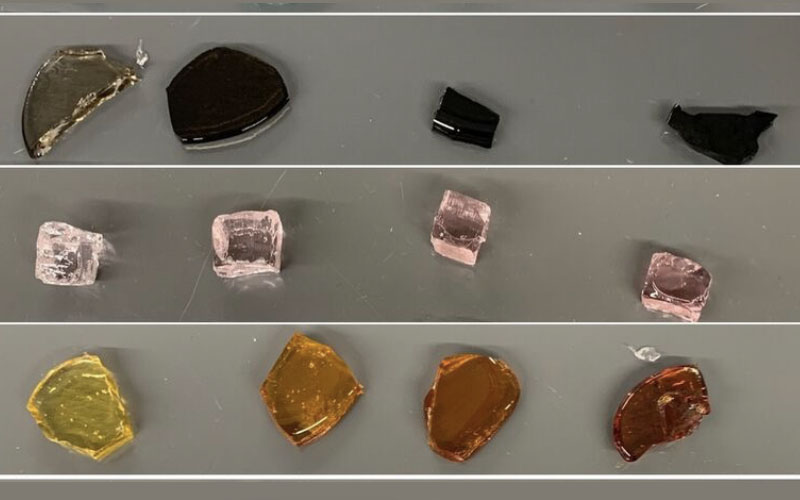
    One of the largest challenges facing the glass industry today is the immense amount of carbon emissions produced by the production of glass. At least 86 million tons of carbon dioxide is released into the atmosphere each year from glass manufacturing. LionGlass engineered and researched at Penn State – named after the Nittany Lion mascot – has a solution to shaving carbon emissions by half, effectively revolutionizing the glass industry.

    This new glass is much easier to produce and is about 10 times stronger than conventional glass. This, coupled with the fact that LionGlass requires minimal energy to produce, rivals Corning Gorilla Glass — the glass on the screen of your iPhone — in resourcefulness.

    Our goal is to make glass manufacturing sustainable for the long term. LionGlass eliminates the use of carbon-containing batch materials and significantly lowers the melting temperature of glass.

    In a discussion with Penn State, John Mauro, lead researcher on the project, a co-creator of Corning Gorilla Glass and Dorothy Pate Enright Professor of Materials Science and Engineering at Penn State, explained the team’s goal for LionGlass.

    “Our goal is to make glass manufacturing sustainable for the long term. LionGlass eliminates the use of carbon-containing batch materials and significantly lowers the melting temperature of glass.”

    The most common glass used in household windows and glassware products is called soda lime silicate glass. The glass is made by melting soda ash, limestone and quartz sand. A huge byproduct of this melting process is an immense amount of carbon dioxide, a greenhouse gas.

    John Mauro. Image: Penn State

    The largest contributor to large carbon output is the energy needed to heat furnaces enough to melt the glass. LionGlass cuts the required temperature by about 300 to 400 degrees Celsius and greatly reduces energy consumption.

    The research team recently filed a patent application to begin the process of taking LionGlass to the market and has received interest from customers and manufacturers in the glass industry. According to Mauro, the team is in discussions to conduct a pilot-scale trial of LionGlass, which they hope to achieve later this year.

    A glass that is extremely durable, energy-efficient and thin could dramatically increase the opportunity for glass use in healthcare, transportation, communication via fiber-optic glass and more.

    The team is now testing and studying how LionGlass reacts to a variety of different chemical compositions. This testing will provide a better understanding for researchers on how the glass could be used around the world in different conditions.

    “The next step is to conduct a trial on a continuous melter, which will allow us to optimize the melting and forming conditions of LionGlass while addressing engineering questions related to full-scale manufacturing,” said Mauro.

    Image: Glass International

    LionGlass is also much stronger than ordinary glass, and is about 10 times stronger than soda lime silicate glass which, according to Penn State, cracks under 0.1 kilograms of pressure. The maximum load of LionGlass has still yet to be found as the research team reached the maximum force possible by the indentation equipment.

    “The improved damage resistance of LionGlass would be a great benefit for everyday glass products including glass jars and bottles, drinking glass and windows. It may also prove advantageous in fiberglass-reinforced composites,” said Mauro.

    Possibilities of decreasing the size of LionGlass have arisen since the glass is so crack-resistant. A glass that is extremely durable, energy-efficient and thin could dramatically increase the opportunity for glass use in healthcare, transportation, communication via fiber-optic glass and more.

    Glass remains to be vital in everyday life and Mauro and his team are determined to find an environmentally friendly solution to glass manufacturing.

    “Glass is key for renewable energy generation,” Mauro said. “For example, windmill turbines are made from fiberglass, and photovoltaic solar cells are built on glass substrates. Lightweight glasses will also be key to lower energy consumption related to manufacturing and transportation. In the realm of healthcare, glasses with improved mechanical and chemical properties are used as vials for life-saving vaccines, and bioactive glasses can aid patients with both hard and soft tissue repair.”

  • Agtech startup Croptix announces landmark investment by advancing eco agriculture

    Agtech startup Croptix announces landmark investment by advancing eco agriculture

    By Gracie Mullan

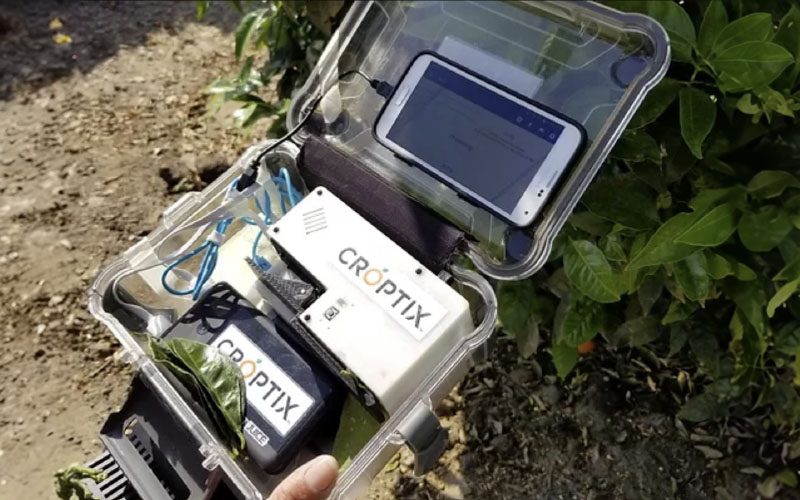
    Croptix, a leader in tech sensors that detect plant diseases right in the field, announced that a significant investor and stakeholder in agriculture care and research Advancing Eco Agriculture (AEA) has granted the Croptix team a major investment to fuel their research.

    With the ongoing support from Penn State, Ben Franklin Technology Partners, 1855 Capital, and now AEA, Croptix can diversify its plant health detection, improve crop quality, and provide better turnover rates for farmers. Croptix plans to expand its technology and services nationwide and eventually globally to assess nutrition and disease in a variety of crops.

    MRI is proud to have supported the team with seed funding from our Humanitarian Materials program when they needed to make the direction change, and it is very fulfilling to see the results of that seed support.

    “We are very excited about the success of Croptix in bringing in an impressive funding package,” said David Fecko, the director of MRI (Materials Research Institute) at Penn State.

    “The company started small in a niche area of handheld spectrometers for general materials characterization, but when they found an application that played to the strengths of their technology, they made a strategic pivot. MRI is proud to have supported the team with seed funding from our Humanitarian Materials program when they needed to make the direction change, and it is very fulfilling to see the results of that seed support.”

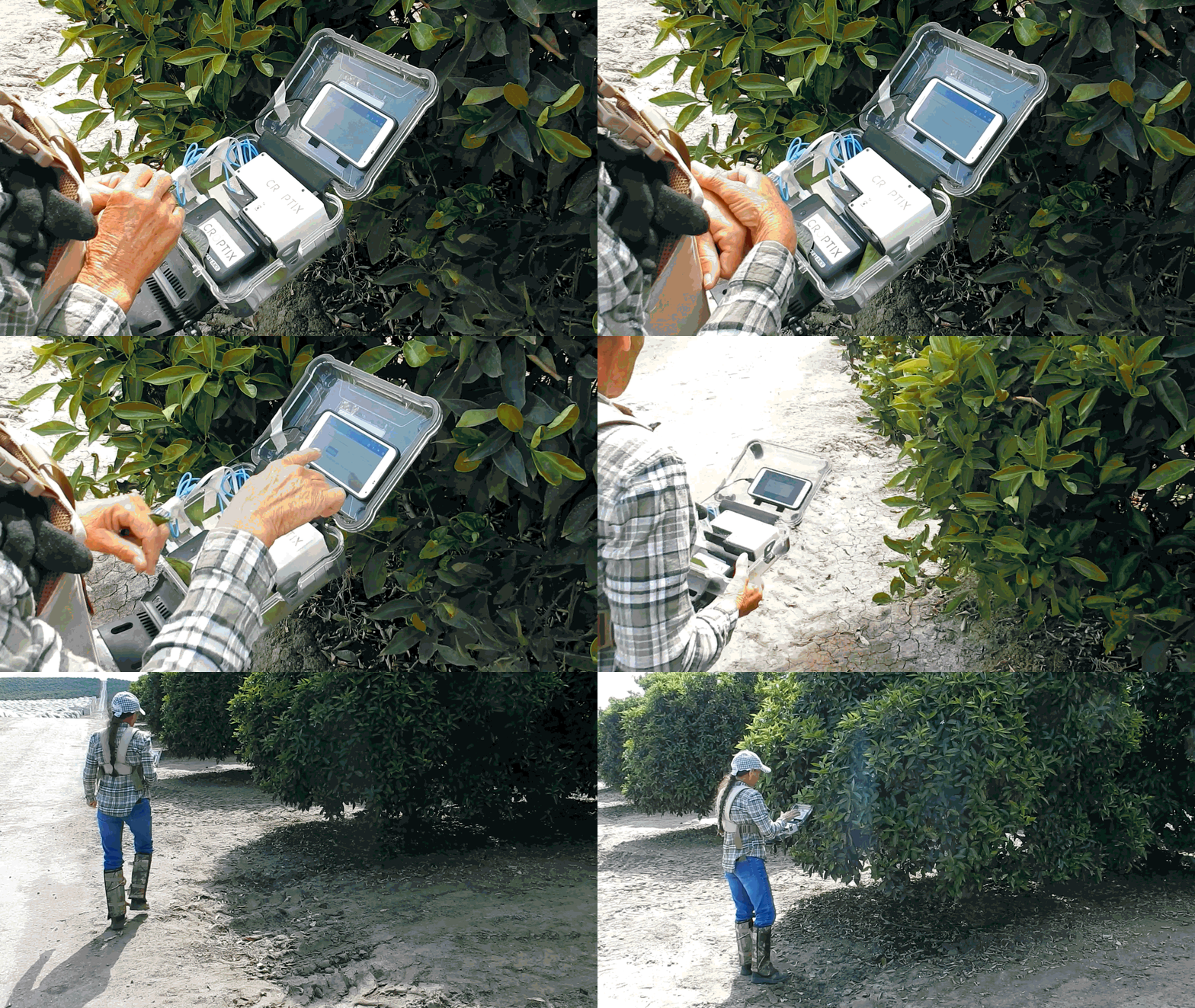
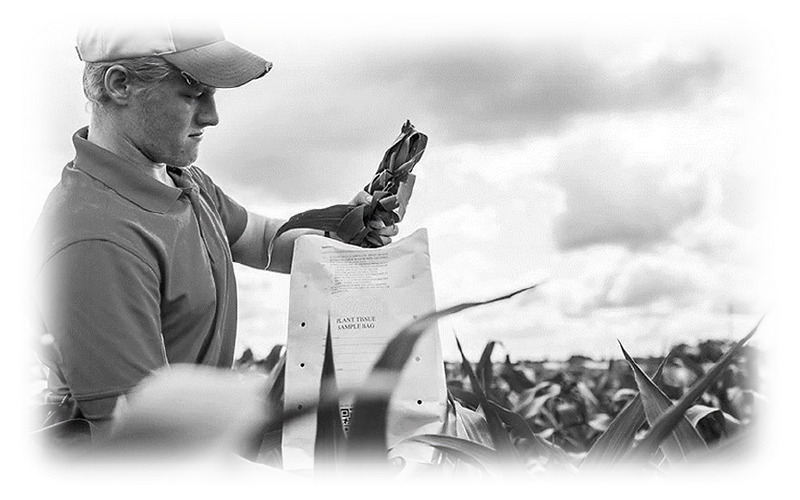
    Croptix was founded by CEO and co-founder Dr. Edwards and CTO and co-founder Dr. Zhiwen Liu to commercialize sensor technology that could more readily assess the health and condition of the crop right in the field. They translated their technology from the laboratory into hand-held devices for farmers to use right in their fields. Their research began with the help of Penn State’s research labs.

    Penn State allowed Croptix to transition from an idea into actuality. The Office of Technology Management and Invent Penn State helped facilitate the use of licenses and provided networking opportunities for the startup.

    “The technology we are creating will allow the disease detection process to be significantly expedited for farmers to identify the problem before it becomes a crisis,” said Dr. Edwards.


    According to Dr. Edwards, without sensors, detecting disease or nutrition in crops can be long and arduous. Farmers must take a sample of their crop, send it to a lab where the sample is tested, and receive results within seven to ten days. At that point, the information could be dated and unuseful to the farmer. By providing the technology directly to the farmers, this detection process is optimized.

    Early in-field detection of plant health is important to prevent the start and spread of disease. “It’s better to be proactive than reactive,” said Dr. Edwards. “Often if diseases are not identified before they are visible, a whole field or orchard could be contaminated.”

    The technology we are creating will allow the disease detection process to be significantly expedited for farmers to identify the problem before it becomes a crisis.

    With patented in-field sensors, cloud-based platforms, AI technology and more, farmers are able to receive results quickly on the Croptix mobile app. Farmers are able to evaluate potential risks to their crops before they become a major issue.

    “We’ve built a platform that combines innovative sensor technologies with the data we’ve collected in a way that we specialize in,” said Dr. Edwards. “We have been able to gather data quickly, analyze results, and present findings in an efficient way.”

    The next step for Croptix is to provide more easy-to-use products for farmers to use on a variety of crops. Dr. Edwards also looks forward to expanding the team to grow its network.

    “When starting a company, it is very important to surround yourself with people who can help your idea succeed. Also, realize that the path you expect to go often isn’t the path you’ll take,” he said.

  • Turning big ideas into viable business

    Turning big ideas into viable business

    By Gracie Mullan

    Have an idea or invention that is poised to change the world? Unless it answers one giant question, there’s not a very big chance of success, according to Roger Dagen. Dagen is the Executive in Residence for Transformation Business Services Network (TBSN) at Ben Franklin Technology Partners, which is widely considered one of Pennsylvania’s greatest business and development programs. But before the TBSN dream team jumps in to handle the technical side of starting a business, it directs entrepreneurs to ask a hard question about their product.

    “You need to get out of the lab and talk to people who you believe are your customers,” Dagen said. “Don’t talk about your product — talk about their problem. Ask them, if you would do something different, what would you do?”

    “And then, once you have a broader understanding of the problems that your customers are facing, only then can you understand the nuances of how your product can solve those problems.”

    He said that customer discovery — a requirement in Ben Franklin TechCelerator — is a game-changer for startup founders. “It often results in a pivot because how founders thought their product would be needed isn’t close to being true.”

    Dagen has over 40 years of business experience, including serving as the Director of Penn State’s MBA Program at the Smeal College of Business, and today utilizes his expertise to help give small, medium and large business operations a critical boost to jumpstart profitability.

    Roger Dagen, Executive-in-Residence for Transformation Business Services Network (TBSN) at Ben Franklin Technology Partners.
    Along with the rest of the Transformation Business Services Network team, he helps company founders with resources for accounting, sales, human resources, operations, production management, financial planning and market research.

    “We focus on helping transition the startup companies from an idea to a solid plan to start and grow their business. We utilize the Business Model Canvas conceptual framework, which helps them engage in customer discovery, leading to a point where they can achieve the all important product-market fit.”

    Dagen’s own business journey started in Minneapolis and took him all over the United States. But when he got to State College, he put down roots.

    “It’s just such a great place to live!” he said. “From the climate to the small town atmosphere to healthcare — it really has all the elements to be one of the top 10 places to live.”

    Beyond the livability, he said that Happy Valley is perfectly positioned for entrepreneurs, and has tremendous potential in the business sector.

    “We have a very robust networking and support system for startup companies. Organizations like Invent Penn State, Happy Valley Launchbox, Penn State Small Business Development Center, Ben Franklin and so many more are there for entrepreneurs to utilize to meet their goals.”

    “There are just so many opportunities here,” he said.

  • Happy Valley infrastructure: investing in Penn State

    Happy Valley infrastructure: investing in Penn State

    By Gracie Mullan

    Are there 5½ square miles anywhere else in the country enjoying more investment dollars than Happy Valley? With Penn State bucking the national trend of declining enrollment—University Park enrollment grew 2.7% in 2022, boasting higher numbers than fall 2019 pre-covid enrollment—the university is investing heavily in campus renovations.

    Want an overview of the many projects that are either completed, underway or upcoming on campus? Click below to browse through the photo gallery and get a look at the new face of Old State, complete with stats and info on every slide.

    Where else will you see this level of infrastructure in such a concentrated space in the United States? (Seriously, tell us. We want to hear from you!) To learn more about Happy Valley’s infrastructure, see Happy Valley infrastructure: innovating Downtown State College and The benefits of highrises in downtown State College.

  • Happy Valley Infrastructure: innovating Downtown State College

    Happy Valley Infrastructure: innovating Downtown State College

    By Gracie Mullan

    The 5½ square mile radius that includes State College Borough and Penn State has attracted billions in investment over the last decade and with good reason. Happy Valley is in demand.

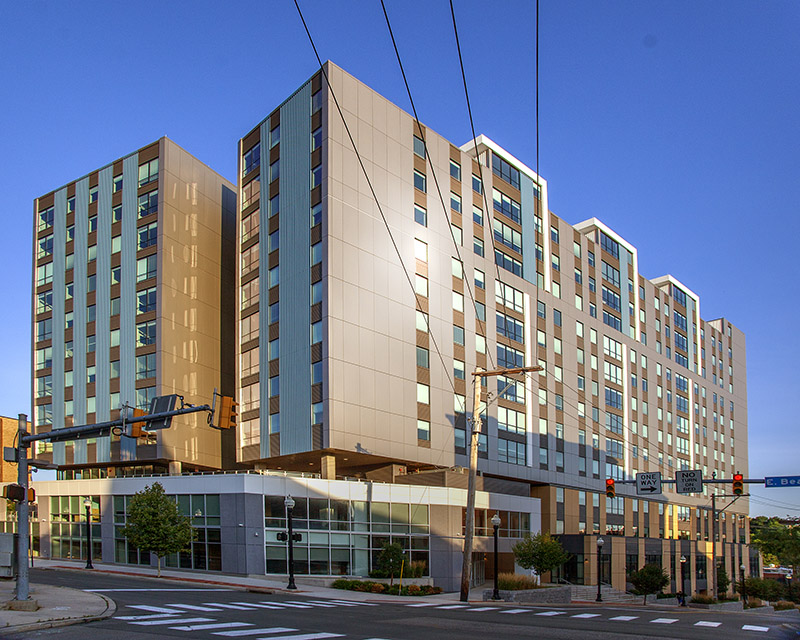
    As part of an initiative to grow State College, numerous 12-story highrises have popped up in downtown State College in recent years to increase the amount of apartment space for students and non-students who wish to live downtown.

    The creation of highrises has dramatically increased the number of beds available (over 4,000 as of June 2023) and has encouraged businesses to move downtown and out of cities. KCF Technologies and Orange Theory are just two examples of businesses that have moved into the commercial space available on the first floors of highrises. (Still concerned that the official bird of Happy Valley is a crane? The highrises are a very good thing for downtown State College— and you can see more of the reasons in our recent story The benefits of highrises in downtown State College.)

    Click below to browse through HappyValley Industry’s exclusive gallery of images from the new downtown State College and get a complete overview of the many projects that are either completed, underway or coming soon.

    Follow the money! See more about Happy Valley’s infrastructure, see Happy Valley infrastructure: investing in Penn State and The benefits of highrises in downtown State College.

  • The benefits of highrises in downtown State College

    The benefits of highrises in downtown State College

    By Gracie Mullan

    The HERE building seen from Beaver Ave and Garner Street. Image: Chuck Fong.

    With Penn State’s rapid growth in recent decades, faculty, staff, students and visitors continue flooding into Happy Valley. As you’d expect, both housing and visitor accommodations are areas that have required particular attention downtown.

    According to the Downtown State College Improvement District, on average, 1.5 million to 2 million people visit the downtown area each year with the biggest numbers around football weekends and graduations.

    This number will likely grow, as Penn State gears up for an extremely successful 2023 season in lieu of the 12-team expansion to the playoff system. On top of that, Beaver Stadium is also expecting a long-awaited $700 million renovation set to be finished by 2027 as part of the overall $2.183 billion university 2024-2028 capital plan.

    Penn State evolved to meet the demands of a growing student population in recent decades. Then it was State College’s turn to decide how to create more living space.

    A larger stadium with upgraded facilities means that even more alumni will likely be coming back during home football weekends to enjoy the brand-new stadium. Plus, visitors will continue to visit for events at other Penn State venues like the Bryce Jordan Center and Pegula Area and Eisenhower Auditorium.

    Penn State evolved to meet the demands of a growing student population in recent decades. Then it was State College’s turn to decide how to create more living space. Because of zoning, new builds crept into surrounding townships, edging into residential districts and farmland.

    Beginning in the early 2000s, the Borough of State College’s leadership saw the need for change, to keep student housing close to downtown State College and bring with it commercial and dining space.

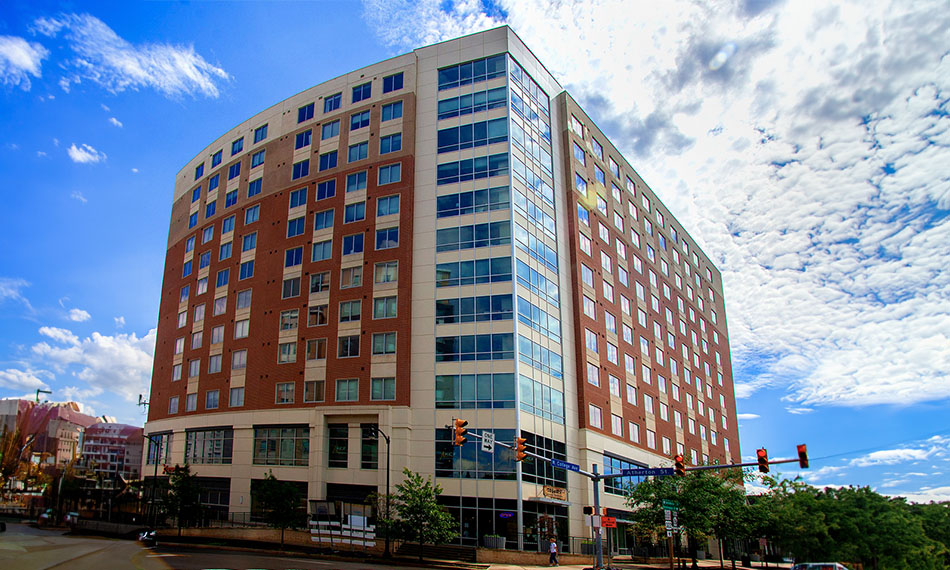
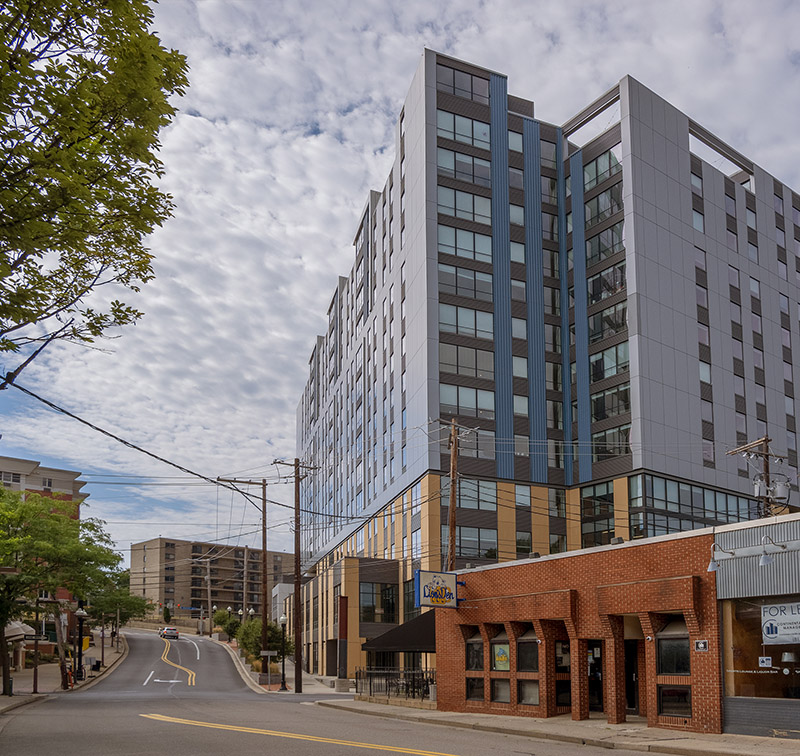
    Construction of The ōLiv highrise next to The Legacy building on East College Ave. Image: Chuck Fong.
    In one of Ed LeClear’s first campus roundtable meetings in 2014 as the Director of Planning and Community Development, along with Borough Council and members of UPUA (University Park Undergraduate Association), the student government at Penn State, LeClear heard requests from student leadership for three major categories for improvement: substandard housing, horrible living conditions, and a lack of new improved buildings.

    “Because the zoning was what it had been in the 1980s and 1990s, growth of student residential housing was pushed out into the neighborhoods and townships,” LeClear said. Housing development follows where the market and regulations are, he explained.

    “In the 1990s and 2000s in the region, it was permissive to build in the townships and not in the borough. There was a desire to maintain low-density student housing downtown. That changed in the 2000s. When I started in 2014, there had been a series of changes in 2005, 2007, and 2013 that created a zoning environment that allowed for larger buildings downtown with a much larger residential footprint. This coincided with a huge increase in purpose-built student housing nationally.”

    The zoning changes, plus a shift in the national market, led to a developer interest in student housing with the regulations to be able to build in State College.

    Because the zoning was what it had been in the 1980s and 1990s, growth of student residential housing, was pushed out into the townships.

    The zoning ordinance that originally allowed the construction of highrises was agreed upon in 2005 in hopes of building the Fraser Center on West Beaver Avenue. That timeline was delayed by the 2008 Great Recession.

    In 2013, a zoning amendment was passed which allowed the construction of the highrises lining the edges of College Ave. and Beaver Ave. with one condition, agreed upon in 2006 and 2007: two stories of commercial space had to be accommodated for in the construction plans.

    (The 12-story Fraser Center, home to Hyatt Place Hotel, Federal Taphouse, Target, and Planet Fitness, was ultimately completed in 2016.)

    In the years since then, the borough has leaned towards developing more student-living options downtown following the opportunities for student-housing investors that arose because of the 2008 recession.

    “The vision from previous councils was that we need to increase taxpayers and revenue; we also have a need to improve our student housing stock,” LeClear said. “As you increase competition, the market tends to lead to rehabilitation and improvements in existing stock which we have seen.”

    As a result, the downtown area now has seven highrises with one in construction and one in the permit phase.

    There was a lot of logic to where we were going to build. The demand is downtown, the density is downtown so you can walk to campus. But we didn’t want to damage the heart of downtown.

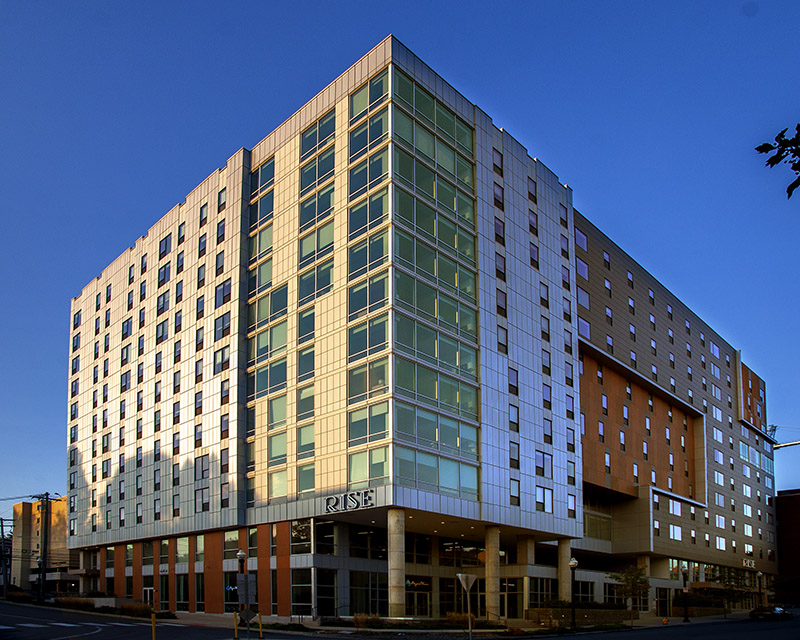
    The Metropolitan, built in 2017, was the first highrise student living apartment, opening the doors for more upscale living options downtown. The RISE and The EDGE followed shortly after in 2018.

    The Maxxen opened in 2020, followed shortly by The HERE in late 2020. The Standard also finished construction in 2021.

    Plans for another 12-story highrise are underway on East College Ave., called The Mark. The Mark is Landmark Properties’ most recent highrise project and is likely to be the last completed highrise downtown for the foreseeable future just a block away from the highrise currently under construction, The ōLiv.

    The RISE building on East College Ave. Image: Chuck Fong.
    The placement of the highrises is strategic. TThe borough decided to create the zoning that would allow the construction of highrises in a large “U-shape” where the apartments would be on the outskirts of the main downtown street. Buildings would only go up on the edges of downtown. This way, the charming and unique atmosphere of downtown could be preserved.

    “There was a lot of logic to where we were going allow the market to build. The demand is downtown, the density is downtown so you can walk to campus. But we didn’t want to damage the heart of downtown. Building around and up was a compromise to the market,” LeClear said.

    As of right now, the only 12-story highrises that have been built are on the corner of College Ave. and Atherton St., and the corner of Beaver Ave. and Garner St.

    The combined construction projects have increased student housing by more than 4,000 beds since 2016.

    “Nothing else has been built above seven stories within that zone and that was on purpose,” LeClear emphasized.

    Currently, there are no plans to change this trend, but the borough council is actively meeting to come up with a new vision for State College. One of the recent demands is to create three-to-five-story housing for non-students downtown.

    “Based on our conversations with Council, I don’t think you are going to see any buildings more than five stories in the heart of downtown going forward,” LeClear said.

    These highrises have greatly increased housing options for students and residents, which has resulted in a vibrant and successful downtown area. Most assume that the apartment buildings are solely for students, but the RISE offers two floors exclusively for young professionals and graduate students, which was specifically incentivized in the zoning.

    The combined construction projects have increased student housing by more than 4,000 beds since 2016.  This higher density of student living has brought more students downtown, increasing the increased tax base and providing more affordable housing with an increased quantity of apartment spaces.

    The HERE highrise on the former Garnet Street Lot, at the intersection of Calder Way and South Garner St.

    Image: Chuck Fong.

    Increasing commercial space for dining and shopping

    Under current regulations, developers must have two stories of commercial space in each building. Because of this regulation, a variety of restaurants and businesses have opened in the spaces including State College’s own KCF Technologies, Orangetheory, Tadashi restaurant, and more. In March 2023, a liquor license request was made by the owner of GLU Hospitality for the Philadelphia-based Firgo Italian which intends to open a location on the first floor of The Standard highrise. With the request for approval in May, the restaurant is on its way to Happy Valley. The first floor of The Standard is set to be the new home for a bagel shop as well, the latest in a number of welcome additions to the food options available downtown.

    Only 83,336 of the over 300,000 square feet of retail space built or under construction in the new highrises is still available today.

    “By this time next year when you look at The Standard, the only space that’s actually empty on the first floor is on the corner,” LeClear said.

    According to LeClear, 300,000 square feet of retail space has been built or is under construction in the new highrises from 2016 to today. Only 83,336 square feet of retail space is still available today. This number is even more impressive since many companies have moved into commercial space in the three years since the COVID-19 pandemic began. These new businesses have greatly increased traffic downtown and many residents are able to enjoy new restaurants and amenities in the heart of downtown.

    Actively combatting climate change

    With the development of the highrises and renovation of older buildings, State College is well positioned for climate change going forward. The new buildings are much more energy efficient compared to the older buildings. The downtown area is easily walkable, and residents can meet almost all of their wants and needs by walking to a store downtown. The community also has access to public transportation via the CATA buses and the local airport. The community also has excellent schools including three walkable elementary schools all located within the borough and one of the best school districts in the state, the State College Area School District.

    The Borough Council is actively meeting to come up with a planned vision for State College. According to LeClear, the community should expect a report in late 2023 for future plans.

    “Our job from a zoning standpoint is to determine what the community wants and finetune that into something the market is willing to create. That’s the process we are in right now with council to figure that out,” LeClear said.

    “We will be an adaptable community. I think we will be a welcoming community as climate change occurs. I think more people will move here because of the assets we have. We have a great competitive advantage going forward,” LeClear said.