Author: Cara Aungst

  • The U.S. only produces 12% of semiconductors produced globally. A Penn State-led consortium is poised to change that.

    The U.S. only produces 12% of semiconductors produced globally. A Penn State-led consortium is poised to change that.

    By Cara Aungst

    The CHIPS and Science Act provides $52.7 billion for American semiconductor research, development, manufacturing, and workforce development.

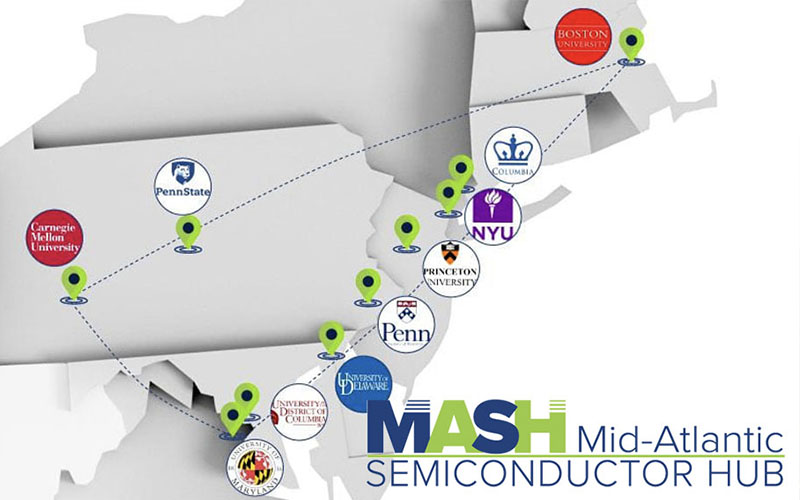
    Semiconductor use is skyrocketing, used in everything from military equipment to mobile phones to climate-friendly lighting and is the lifeblood to the new boom in artificial intelligence. They are projected to become a trillion-dollar industry by 2030, but only 12 percent of the market share is currently manufactured in the United States. That’s a problem, and one that Penn State and Mid-Atlantic Semiconductor HUB (MASH) is determined to take on. On May 22-23, Penn State hosted a MASH workshop, with representatives from 10 Mid-Atlantic universities, government and industry, to identify industry-academia-government partnerships that will position the U.S. for technology and workforce leadership in semiconductors and microelectronics.

    Semiconductor and chip technology have been tremendous strengths for Penn State for several years, visible in our national rankings as No. 1 and No. 2 for materials science and materials engineering.

    “The solution is big,” Penn State’s president Neeli Bendapudi said at the opening of the event. “But if not us who, if not now, when?”

    MASH was created by Penn State in answer to the U.S. government’s CHIPS (Creating Helpful Incentives to Produce Semiconductors) and Science Act, which was signed into law on Aug. 9, 2022, and is formed around the concept of regional hubs, which will be focused on promoting research, development, and commercialization of semiconductor technologies in specific regions of the US.

    “Semiconductor and chip technology have been tremendous strengths for Penn State for several years, visible in our national rankings as No. 1 and No. 2 for materials science and materials engineering,” Lora Weiss, senior vice president for research, said.

    The two-day event brought representatives from Mid-Atlantic schools like Princeton, Columbia, the University of Pennsylvania and Cornell, along with government agencies and industrial partners, all focused on one thing: how to leverage collective expertise to create solutions.

    Here are some takeaways from the event:

    The Mid-Atlantic region has what it takes to create solutions for this issue.

    The Mid-Atlantic Semiconductor Hub (MASH) was created more than a year ago by Daniel Lopez, a Liang Professor of EE at Penn State University and Director of Penn State Nanofabrication facility. “The technical expertise and resources in semiconductors concentrated in the area is unique in the world. By coordinating and sharing resources across MASH we could have a unique impact in workforce development and semiconductor manufacturing.”

    “There is such a wonderful infrastructure,” Gerald Lopez, Director of Operations and Business Development & Singh Center Associate Director, University of Pennsylvania, said, adding that the Mid-Atlantic region of the U.S. has the highest density of laboratories and universities in the world.

    The United States has been behind China and other countries in production for years, but Covid amplified the supply chain issues and shortages.

    In addition, with more than 60 million who call the region home, it offers a workforce pipeline to fill the jobs needed to manufacture semiconductors.

    Solving semiconductor production is a national security issue.

    The United States has been behind China and other countries in production for years, but Covid amplified the supply chain issues and shortages that can result when semiconductors aren’t available. “It’s an economic security issue and a national security issue,” Weiss said at the event.

    Workforce development is a major piece of the puzzle, and it starts with education.

    Experts projected that 300,000 direct jobs will be created and the supporting supply chain will create another 1.7 million jobs over the next 10 years.

    The CHIPS and Science Act represents billions in income, but it also showcases the best of American R&D: an opportunity to empower entrepreneurs, develop STEM talent in underprivileged areas, and expand the geography of innovation.

    Where will the talent come from? It requires education and access, National Science Board Vice Chair Victor McCrary said. That means increasing funding for community colleges, increasing STEM education in K-12 classes and creating access for talent from all demographics. “One weapon we have is geographic and ethnic diversity,” he said. “We just have to leverage it.”

    “We don’t need to compete, but team up”

    The event built in coffee breaks, Q&A sessions and boxed lunches around round tables — all created to spark conversation and collaboration. “This is one of the most open meetings I’ve ever attended,” one attendee from Cornell told me, noting how everyone from lab techs to industry leaders sat and talked, ideating about how to work together.

    Penn State is a clear leader in materials and creating collab opportunities

    I got the opportunity to tour the Millennium Science Building with a group of industry leaders on Wednesday morning, and it was cool to see Penn State’s materials dominance from an outside perspective. It was unabashedly optimistic, gritty and collaborative — working tirelessly to find solutions. A big part of the CHIPS and Science Act proposal (which hasn’t been released yet) is said to focus on infrastructure, and Penn State did a great job of showing off its powerhouse of knowledge and assets.

    One of the speakers, Victor McCrary, made a connection to the days of Sputnik and the space race, and looking around that room filled with people brainstorming and collaborating, it wasn’t hard to see a comparison.

    The CHIPS and Science Act represents billions in income, but it also showcases the best of American R&D: an opportunity to empower entrepreneurs, develop STEM talent in underprivileged areas, and expand the geography of innovation.

    “This is what the future is all about,” McCrary said.

  • Loneliness is epidemic, but there is a cure

    Loneliness is epidemic, but there is a cure

    By Cara Aungst

    Photo: Unsplash.com

    In May, the U.S. Surgeon General released a report on the national epidemic of “loneliness and isolation.” The report describes the very real health risks associated with loneliness; people who do not have social connections face the same risk of death as people who smoke 15 cigarettes daily. According to the report, for example, loneliness is associated with a 29% higher risk of heart attack and 32% higher risk of stroke. But there is a cure, according to the Surgeon General: “Our relationships are a source of healing and well-being hiding in plain sight – one that can help us live healthier, more fulfilled, and more productive lives.”

    The biggest lesson we learned is that it isn’t wealth, fame or hard work that matters. Good relationships keep us healthier and happier. Period.

    In a word, the cure to this deadly epidemic is friendship. But combatting loneliness and creating strong friendships is easier said than done. Robert Waldinger, a professor of psychiatry at Harvard, is the fourth director of the longest-running study of adult life which explores the question: “What keeps us healthy and happy as we go through life?”

    Since 1938, the Harvard Study of Adult Development has been following a group of 724 men through work, home, family and health. “The biggest lesson we learned is that it isn’t wealth, fame or hard work that matters. Good relationships keep us healthier and happier. Period,” Waldinger said. He added that the healthiest 80-year-olds turned out to be the ones who were most connected in their 50s. Those with good relationships had healthier bodies and clearer minds than their counterparts.

    Decline of friendships

    People who do not have vital connections show marked differences from people with good friends. In Bowling Alone, Robert Putnam posits that participating in even one social organization and forming friendships could cut your odds of dying in the next year in half.

    In the United States, friendship is on the decline. In the decades since 1990, the percentage of Americans who say that they have less than three close friends has doubled, going from 16% to 32%. Those reporting no friends at all? That number has risen sharply from 3% to 12%. Thought leader Scott Galloway reports that 1 in 7 men have no close friends at all outside of their family.

    As people experience leisure, they decrease their sense of loneliness, increase their quality of life, and improve their health and well-being.

    The solution? Look for opportunities to deepen and maintain relationships

    John Dattilo, professor of recreation, park and tourism management at Penn State, has spent decades studying leisure. Over his career, he has observed that as people experience leisure, they decrease their sense of loneliness, increase their quality of life, and improve their health and well-being.

    In a recent interview with Penn State, Dattilo discussed ways that people might help reduce their loneliness.

    Amazement over amusement

    “In our society, companies often design products and experiences to amuse people; amusement can pacify, but it does not meaningfully engage people,” he noted. “We should ask ourselves, “What brings me amazement rather than amusement?”

    He said that we need to continue to find ways to make human connections. “People who regularly experience leisure with others are likely to have positive social experiences and feel less lonely. This provides social support that is vital to our mental and physical health. When we join a club or attend a social recreation activity — a running club, a martial arts class, a regular coffee shop gathering, a group of people who spend time in nature — we connect with people who share a common interest. These types of experiences are valuable for several reasons, and one is that they create bonds and social connections.”

    We should ask ourselves, “What brings me amazement rather than amusement?”

    Scott Galloway concurs. “If you’re a young person, you should be outside, at the office, at cafes, in parks, at coworking spaces, gyms, clubs, bars, friends’ living rooms, making connections, risking awkwardness & rejection, forming friendships & work relationships and finding love in real life,” he said, emphasizing that connection is in the real-life interactions of our lives. (watch the video here)

    The takeaway?

    Friendships not only enrich our lives but are proven to extend our lives and make us healthier while we live it. Find ways to reconnect with old friends, and look for chances to make brand new connections. Your friendships — and your health— will thank you.

  • Mount Nittany Health breaks ground on new Patient Tower

    Mount Nittany Health breaks ground on new Patient Tower

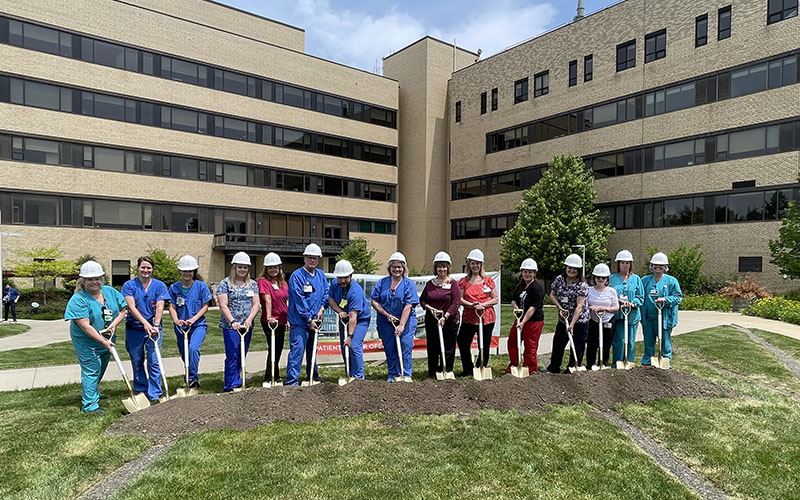
    Mount Nittany Health hosted a groundbreaking celebration on May 16, 2023, officially marking the start of construction on the new Patient Tower at the Mount Nittany Medical Center. Mount Nittany Health employees and representatives from Whiting-Turner Contracting Company gathered at the future site of the new tower to commemorate this milestone.

    “Mount Nittany Health’s new Patient Tower will have a significant impact on the Centre Region. The new Patient Tower will have 168 private patient rooms, which will create a technologically advanced, comfortable environment for patients to recover and heal. Their families and loved ones also will have more space in the room and will have access to expanded dining areas and outdoor respite spaces. The design of the 10-floor tower will bring natural light into the rooms while capturing spectacular views of nature in a sustainable building,” Thomas Covaleski, MD, Chief of Medical Staff, Mount Nittany Medical Center and Hospitalist, Mount Nittany Physician Group, said.

    Opening in 2026, the new Patient Tower will deliver an advanced patient-centered experience and serve an expanding number of Mount Nittany Health providers.

    The new Patient Tower will include telemetry capabilities, outpatient clinics, point-of-care registration, enhanced dining and food service preparation, outdoor space for patients, visitors, and staff, a modernized data center, a central utility plant, a 171-space parking deck, and walkway, and improved storage space.

    “Overall, Mount Nittany Health’s new Patient Tower is a major investment in the health of our local community and ensures access to high-quality healthcare for those living in the Centre region,” Covaleski added. 

    Opening in 2026, the new Patient Tower will deliver an advanced patient-centered experience and serve an expanding number of Mount Nittany Health providers. This strategic investment builds on Mount Nittany Health’s commitment to its mission of ‘Healthier people, stronger community,’ and is part of the health system’s focus on providing award-winning care close to home.

    Founded in 1902, the Mount Nittany Medical Center began as an 8-bed infirmary in Bellefonte, Pa. More than 120 years later, Mount Nittany Health has grown into an independent, community-governed health system that serves more than 400,000 members of the community.

    New Patient Tower Facts:

    • 10 floors, 300,000 SF, $350M project
    • 168 private patient rooms, scenic views from every floor
    • Enhanced healing environment with indoor and outdoor reflection
    • Respite and amenity spaces for patients and staff
    • Advanced communications technology for patients and staff
    • Convenient access to outpatient services like lab, imaging, medical and speech therapy
    • Enhanced dining and food service preparation
    • Convenient parking deck

    Physician and staff feedback has been an essential part of the process and will continue throughout the planning and construction phases. 

    “Nearly 40 Mount Nittany Health team members have served on the initial planning team and more than 200 employees have been involved in the design development phase,” Covaleski said. “Staff were invited to visit life-size mockups of the patient rooms and bathrooms. Over 300 staff members walked through the spaces and provided feedback about the room design and care capabilities. Different teams brought their actual equipment and instruments to the ‘mock rooms’ to get a feel for the space and provide real-world input.” 

    Design development for the project began in August 2022. The internationally recognized design firm, Stantec, is the architecture firm of record, and Whiting-Turner will manage the construction. Occupancy is expected by December 2026.

    More information, including updates about the new tower project, will be posted at mountnittany.org/patient-tower.

  • AI wrote this week’s content. Here’s how it went

    AI wrote this week’s content. Here’s how it went

    by Cara Aungst

    Opening ChatGPT for the first time reminded me of my first memory of the world wide web (yes, I’m that old). I was in the Audio-Visual department at my small liberal arts college, and the AV director showed me how to find, and buy, a font to use in the yearbook design. I distinctly remember thinking, This is going to change everything.

    As ChatGPT unironically asked me to check a box to confirm that I was human, and then started collecting thoughts in a thoroughly superhuman way, I remembered hearing the sound of dial-up for the first time.

    Using the most popular AI photo, graphic and writing tools available, we pulled this issue together. You can find the list at the bottom of this article.

    Was the process fast? Incredibly so. Even for a newbie like myself, registering, learning and producing content took minutes. One article took 20 seconds. Was it good? It depends. We’ve all seen some great examples of AI, but it was clear that it takes very cleverly crafted queries and rework to get there.

    The biggest thing that was missing was the most obvious. Humans. The researchers who call to do interviews over their lunch break, the professors who moved states and even continents to innovate and collaborate HERE. The voices of those incredible humans were noticeably absent. And those are the stories that we live to tell.

    Whether you are curious, terrified, or excited about AI, it’s here. And Penn State — and Happy Valley — is here for it with its unique mix of research and collaboration to push boundaries of possibilities and wrestle with issues in a thoroughly human way.

    One final thought on whether AI will replace all of us — the short answer is not quite yet. Here’s my creepy headshot from AISuitUp that won’t be replacing my outdated LinkedIn profile photo any time soon.

    In this week’s issue:

    Text: ChatGPT
    Logo: LogoAI
    Illustrations: CanvaAI text to image
    Images: Midjourney
    Headshot: AISuitUp

  • COVID layoff turns into thriving marketing biz, thanks to Happy Valley Launchbox

    COVID layoff turns into thriving marketing biz, thanks to Happy Valley Launchbox

    by Cara Aungst

    Khurram Shahzad had no intention of starting his own company when he landed in Happy Valley five years ago so his wife could pursue her Ph.D. But thanks to some unplanned changes during the pandemic — and the resources of Penn State — his digital marketing company Digilatics is changing the landscape for home inspectors across the United States.

    “If Penn State would not have been there for me, I would be working somewhere else, but I wouldn’t be very happy,” he said.

    Shahzad was already an award-winning digital marketer when he arrived in the United States. He started an agency in Pakistan and then moved to the Middle East, where he was responsible for a campaign that resulted in never-before-seen growth for a regional luxury brand. Along the way, he grew his craft beyond clicks and SEO to focus on the WHY for digital marketing — “We ultimately have to measure success,” he said. “Where do you want to be, and what time and resources do you want to invest?”

    Happy Valley Launchbox has played a major role in my life. The encouragement and coaching were impactful. They are so focused on the success of ideas and creating jobs by helping businesses scale and succeed.

    When his wife decided on Penn State for her doctorate, the couple relocated to the United States and Shahzad quickly found a place in a local company that served home inspectors.

    And then, COVID happened.

    The marketing department where Shahzad worked closed, and he was laid off. Over the next few months, he applied for over 400 jobs. “I submitted my CV to banks, grocery stores … anywhere that I could. No one was hiring.”

    In the summer of 2020, he connected with Lee Erickson, associate director of the Office of Entrepreneurship and Commercialization, who told him about Penn State’s 10-week Fast Track Accelerator. She encouraged him to choose a beachhead market that he knew well and create a business to serve the niche.

    Digilatics is making a big difference for clients in the home inspection industry.
    For Shahzad, the choice was easy: he knew how to make digital marketing sing for his clients, and thanks to working with a local startup before COVID hit, he knew about the needs of the home inspection industry.

    With the Fast Track Accelerator under his belt, Shahzad started to build Digilatics for the specific needs of home inspectors — company founders who often tend to be solopreneurs and don’t have the time or expertise to use marketing to expand their client base. But even with his prospects in sight and business in hand, he almost quit.

    “Lee Erickson checked in on me when I was starting up. If she hadn’t, I never would have finished. That’s what it took to encourage me to build the business.”

    If Penn State would not have been there for me, I would be working somewhere else, but I wouldn’t be very happy.

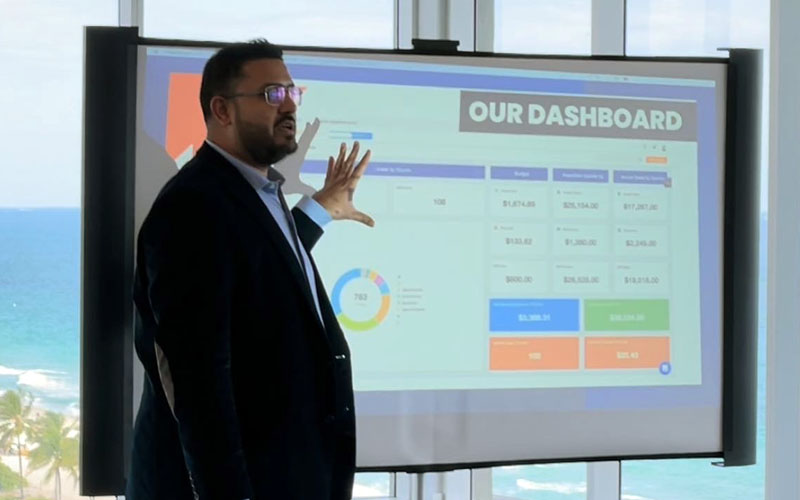
    It’s been a scant two-and-a-half years since Digilatics came to life in Happy Valley Launch Box’s Fast Track Accelerator, but the results have been swift. A core team works from a high rise in downtown State College, and a team of 25+ employees from around the world help to solve pain points — and drive results — for their customers.

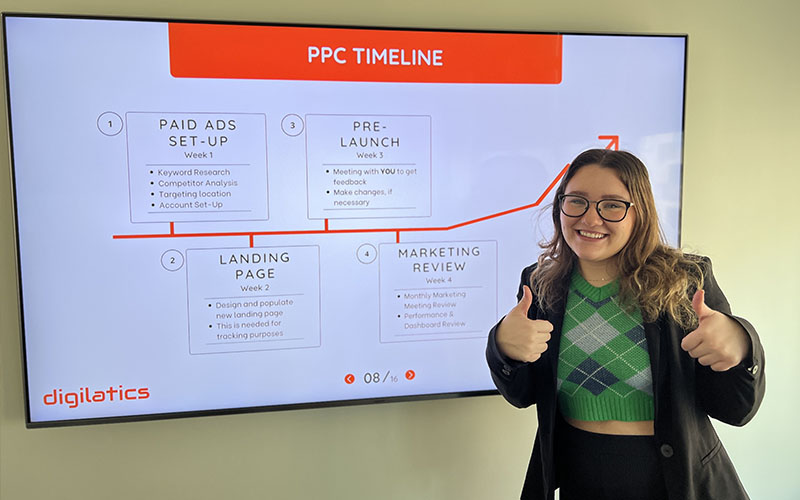
    Digilatics Marketing Manager Gabi Paiva came to Penn State from Brazil and planned to find work in her home country. But after starting at Digilatics, those plans have changed. “There is such a huge opportunity for growth,” she said. “And a chance to mold what the future of the company looks like.”

    The future of the company looks like success. In 2022, they turned $3.4M in marketing money into $40M in qualified business leads. “One home inspection company reported their first-ever million-dollar month because of contracting with us,” Shahzad said. “Many of our clients are now #1 in that area because of how we’ve helped them grow.”

    Shahzad says that Happy Valley — and Penn State, specifically — have played a huge part in their rapid growth. “Penn State’s Happy Valley Launchbox has played a major role in my life. The encouragement and coaching were impactful. They are so focused on the success of ideas and creating jobs by helping businesses scale and succeed.”

  • Outdoor recreation is the future of economic development for small towns, and Purple Lizard is mapping the way

    Outdoor recreation is the future of economic development for small towns, and Purple Lizard is mapping the way

    by Cara Aungst

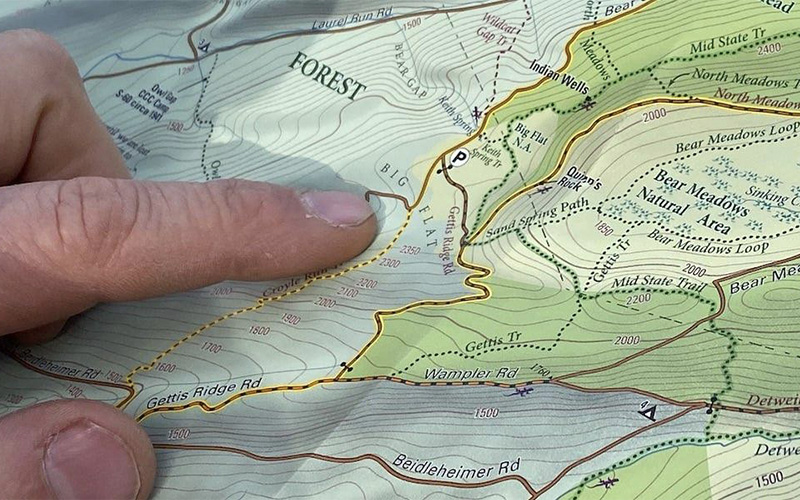
    Purple Lizard maps showcase Happy Valley’s outdoor recreation assets.

    On the day of our interview, Mike Hermann and his team were days away from finishing their 17th map. The map represented more than a thousand hours spent over two years, starting with hiking boots on the ground exploring the trailheads and ravines of a specific outdoor recreation destination and ending with proofs of Purple Lizard’s signature waterproof, rugged maps that Hermann calls “such works of art.” And in spite of all the blisters, long nights and research that went into the map, Hermann says that what happens next is the real magic. Each time a Purple Lizard map showcases outdoor recreation assets in a new area, economic growth happens.

    “Purple Lizard Maps has been a big driver of recreational tourism and recreation economies in every community where we develop a Lizard Map,” Hermann said. “For many communities, outdoor recreation is the future of economic development. When the maps showcase the local assets, more people can easily explore the destinations. They become larger and more diverse, becoming gateway towns. This elevates tourism and gives shops more things to sell. Realtors start selling to people interested in outdoor recreation. Our maps send new faces to outfitters, looking for gear. These small towns become destinations.”

    Each time a Purple Lizard map showcases outdoor recreation assets in a new area, economic growth happens.

    We don’t have to look far to find an example of how outdoor recreation can boost a community, Hermann said. “Look at Millheim. Fifteen years ago, it was not somewhere you went to spend half of a day. But soon it got Elk Creek Cafe + Aleworks and a coffee shop, [and is a place where people stop after a day of biking or hiking at Poe Valley]. Another great example is the Buffalo Valley Rail Trail that connects Mifflinburg to Lewisburg. Within two years of that trail being built, two bike shops relocated to storefronts located on the rail trail. We see this a lot in communities where we map — towns are trying to move away from natural resource extraction and become gateway communities.”

    Hermann said that Purple Lizard maps, which chart adventures from Raystown Lake to the Shenandoah Valley, are now distributed by companies like REI, and LL Bean, and that has grown the outdoor assets even more. “If you walk into the REI flagship store in Washington, DC, you will find a map to Bald Eagle State Forest, and discover that you can be in the mountains in just three hours and have a really nice weekend escape.

    So what about Happy Valley?

    Mike Hermann got his B.A. in Geography from Penn State and started his career as a Digital Cartographic Specialist with Trails Illustrated/National Geographic Maps in Colorado.

    “I went there thinking I was going to a recreational paradise, but it wasn’t,” he said. “If I didn’t leave work before five, there were no parking spaces left at a trailhead. I would get on the trail and be hiking behind people the whole way to the overlook … and then stand behind 20 people, waiting to see the view. It wasn’t what I thought.”

    I saw Pennsylvania as the outdoor mecca that no one knew about. I decided that if I started to do trail maps about what was here, people could see it for what it was.

    “Vail, Colorado is a great place for the super fit,” he said with a laugh, “But regular people can have a great adventure in Central Pennsylvania — it’s for all of us. There is so much to do within 25 minutes of downtown State College. We take it for granted.”

    “There is such a tremendous variety of outdoor recreation available. You can decide to ski and be on a slope in 15 minutes. That’s extremely rare. Or jump on a bike and have access to so many trails.”

    He said that his time in the Rocky Mountains led to his aha moment.

    “When I was a cartographer in Colorado, I  saw how maps drove outdoor recreation in the West. I thought to myself, ‘Pennsylvania has just as many outdoor assets, but they aren’t as well known. I saw Pennsylvania as the outdoor mecca that no one knew about. I decided that if I started to do trail maps about what was here, people could see it for what it was.”

    Growth mindset from the seat of a mountain bike

    This past year, the Department of Conservation and Natural Resources announced that outdoor recreation contributed $13.64 billion to Pennsylvania’s economy and is the 6th largest state in terms of outdoor recreation. Hermann is not surprised. “I’ve seen steady growth ever since I moved back to Pennsylvania,” he said. “There has been such a growth in mountain biking and kayaking over the past 25 years. Being outside is the antidote to the overload of technology in our lives. We spend an inordinate amount of time tethered to our devices and this is a chance to be immersed in something real.”

    What can Happy Valley to capitalize on this shift? It’s already happening, he said. “There is an embarrassment of riches and we are seeing trail systems grow and progress to satisfy the needs of the community. Harvest Fields Community Trails (a beginner trail system located near Boalsburg) happened because the community identified something that was missing and came together to make it happen.

    Continually creating recreational assets is the key to growth. A movie theatre doesn’t just play the same movie for six months. As outdoor recreation grows, we need to plan for that so we don’t end up with the same problems that bigger communities have with overuse issues.”

    By the end of the interview, Hermann muses out loud about what he is going to do when the call is over. “I could take a hike with my wife and dog, take the kayak out to Colyer Lake or see the sunset on my motorcycle. What a luxury to have those kinds of choices — it’s an incredible quality of life.”

  • “Gritty, fast and focused on outcomes”: Todd Erdley’s plan for explosive growth in private industry

    “Gritty, fast and focused on outcomes”: Todd Erdley’s plan for explosive growth in private industry

    By Cara Aungst

    On March 1, Videon founder Todd Erdley joined Ben Franklin Technology Center as a central regional director responsible for mentoring startups and small manufacturers in Centre, Mifflin and Juniata Counties. He calls it a natural next step for him — Ben Franklin was instrumental in Videon’s growth and market dominance, and Erdley has been an outspoken advocate for private industry in his hometown for decades.“I’m running to this opportunity. It’s so obvious that it’s my destiny,” he said.

    His first order of business: engage with current Ben Franklin companies, expand the funnel for company funding opportunities, and activate the entrepreneurial ecosystem.

    “We are going to all put our oars in the water together, going faster toward an outcome that works for us. Happy Valley has a diversity of opportunity and culture along with being a fertile place to start a business and grow that business.  We all can prosper from the success of these  businesses which is why it is so important for Ben Franklin to provide intellectual support and financial resources while also  amplifying all the Centre Region represents.”

    We’re meeting in Erdley’s new office in the 200 Building at Innovation Park, and the feeling is something like the first day of school. He shows off the new perks — like Pi Day — and an office filled with new coworkers. “The depth of experience in these halls!” he says. “It’s incredible. People are here because they want to be here making a difference.”

    There’s something that isn’t new — Erdley’s laser-focused vision for boosting private industry in the area. He’s been championing it for years, notably with his $3B33 strategic plan that he unveiled in 2012. In it, he showed that in 1998, 26 percent of Happy Valley’s top employers were private industry, and by 2012, that number had shrunk to a mere 7 percent.

    “What happened,” he asks. “Companies like Corning, C-Cor, Raytheon and Cerro no longer operated in the area — but it barely made a ripple because the University absorbed that talent.”

    Happy Valley has a diversity of opportunity and culture along with being a fertile place to start a business and grow that business. 

    And while he says that those researchers and innovators have enabled Penn State to vastly grow its research, the lack of private industry is ultimately an unhealthy situation. “Back in 2012, I presented the goal of driving private industry from $1 billion to $3 billion in 2033.”

    “Why? Because we need to positively impact society with opportunities that are proportionate to their passions. We need to create jobs for spouses of Penn State employees. We need to fill gaps that can be created in a company town. Not just that, but it’s my own personal mandate to positively help people become the people who they dream of being.”

    In 2012, Erdley was still CEO of Videon, the company he founded, and well on his way to selling solutions to Amazon Web Services, and his 3B33 plan took a backseat. Today he’s eager to drive outcomes to change the future of Happy Valley.

    In addition to pushing for more private industry in the area, he said that he wants entrepreneurs to learn from his own entrepreneurship journey. “I went from the point of personally guaranteeing company debt — using money from my 401K to make payroll — and knew that something had to change. Raising venture capital relieved me of that burden, and gave wind to Videon. It also gave me the chance to be here with the team at Ben Franklin, who has welcomed me with open arms. The point is, I am supposed to be here.”

    “I want to tell founders that company growth starts with culture,” he said. “You need to be focused not on the what but on the why, and you have to be impassioned about it. Founders also need to be really honest with themselves about creating powerful teams. What is your own superpower and kryptonite, and how can you purposely align with others and complement their strengths and weaknesses? Great outcomes can be achieved, but entrepreneurs need to make sure that they aren’t so headstrong that they aren’t coachable.”

    He said that the end result that he wants to work toward is nothing like Silicon Valley of today.

    “People talk about Silicon Valley as a shining star, but it’s evolved into a venture-driven mentality that is not at all what we want to achieve. It’s not a place we should aspire to be.”

    “Instead, we have an opportunity to be more like Silicon Valley of 1990 — a place with a can-do attitude, all boats rising, gritty and fast and focused on outcomes. That is what Happy Valley can be.”

  • Solving Happy Valley’s sales problem

    Solving Happy Valley’s sales problem

    By Cara Aungst

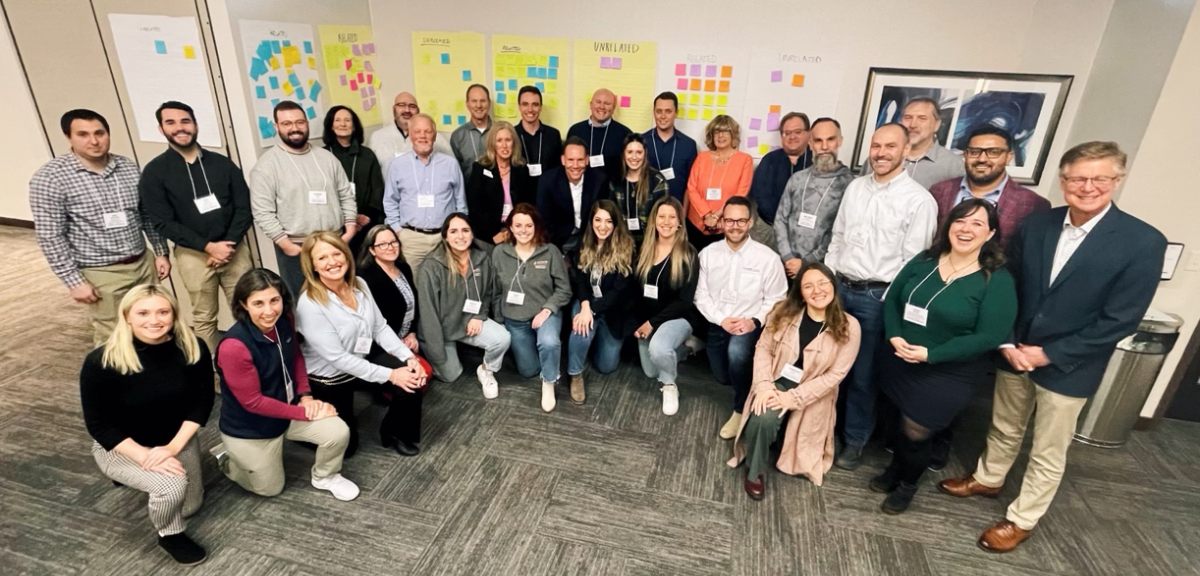
    HappyValley Industry debuted its first workshop yesterday. Here’s what the session revealed about sales in the area.

    On February 28, leaders from companies in the Happy Valley area gathered at the Hyatt Place in downtown State College to talk about a gap in the ecosystem. Long story short, research and innovation is booming, but breakthroughs aren’t always reaching the right consumers. Companies and customers with pain points aren’t finding the right solutions. And businesses with millions (or billions) in potential are finding growth slow or nonexistent.

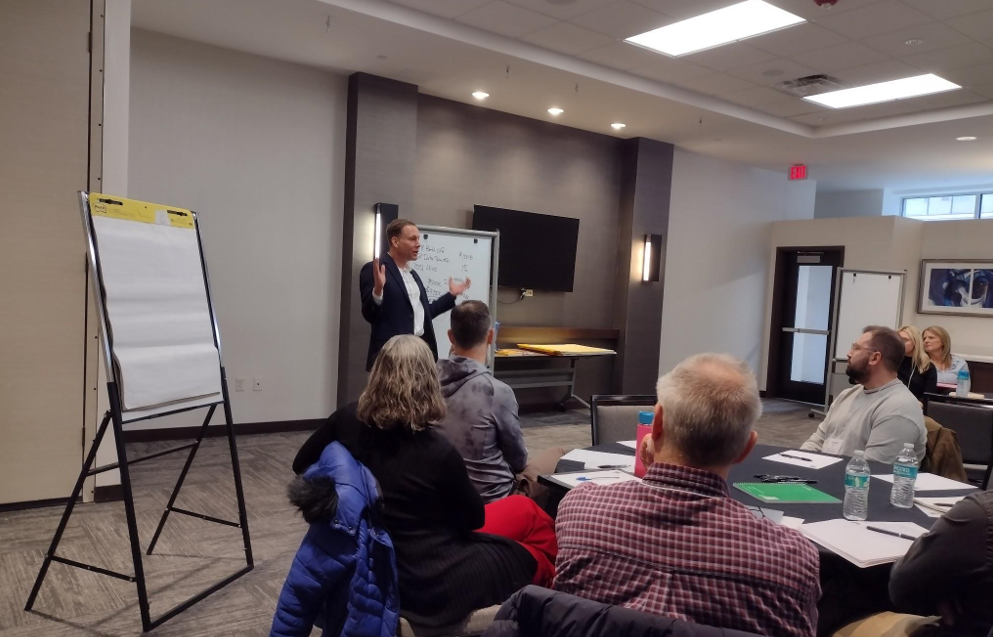
    Keynote speaker Ben Lawrence, author of The Heart of the Wolf: The upside-down secret to being a kickass salesperson, told workshop attendees that there’s a solution.

    “We have to stop talking about our companies and what we do and instead focus on our prospects and the pain that they are feeling,” he said.

    Lawrence, who most recently was Chief Business Officer at Happy Valley’s KCF Technologies, and instrumental in the company’s rapid growth from $2 million to $50 million, said that roughly 3% of the prospects on your list are in the market for the solution that your company can provide. A scant few beyond that are willing to listen. But the 90% that remain? Lawrence said that reaching those prospects requires a total mindset change to focus on problems that those companies have rather than solutions that your company offers.

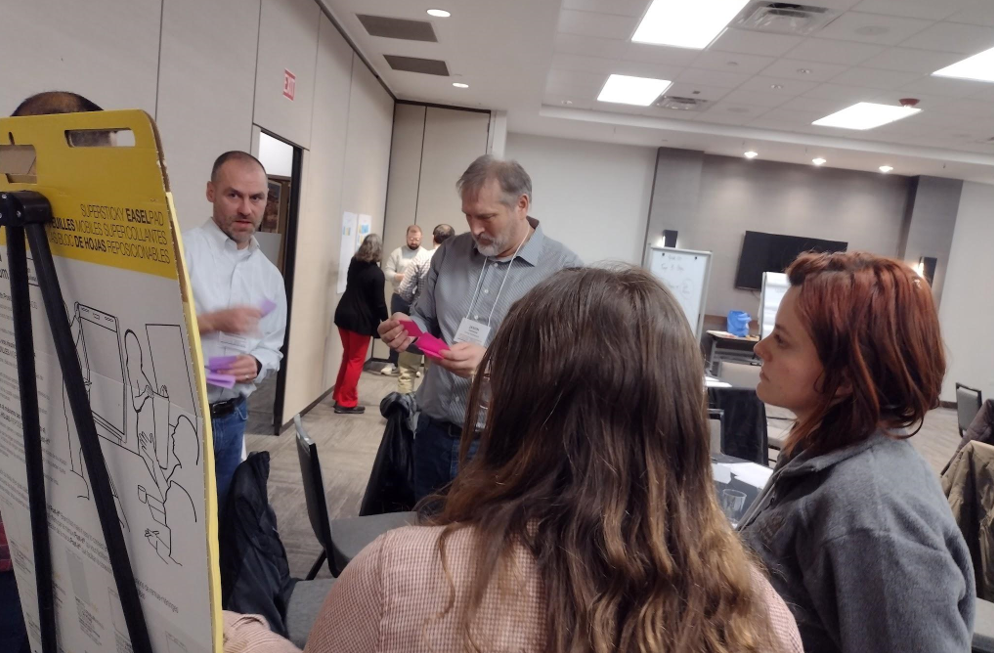
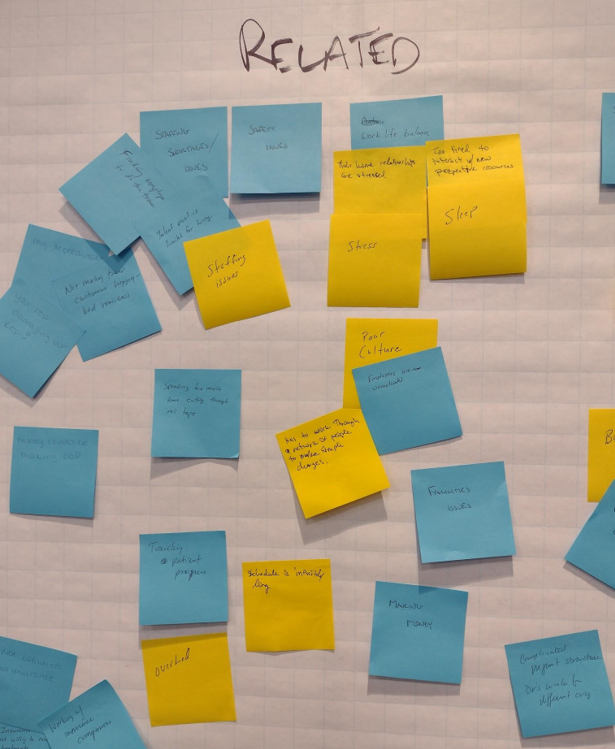
    Attendees workshopped together to look for problems that their prospects needed to solve, brainstormed to create solutions, and then looked at what Lawrence calls “becoming a flashlight educator” — proactively looking for issues that will create problems in the near future for their client base.

    Attendees came from across the Happy Valley ecosystem, from an indoor climbing facility to sensor companies to hospitality to software solutions. Everyone had something in common: deep expertise that they could leverage to solve problems for their clients, or, what Lawrence likes to call “their wolfpack.”

    .

    “My key takeaway is that people buy from people,” Kiara Yough from Actuated Medical said.

    “I learned to earn my audience,” Jason Oakman from Loop Software added.

    Liz Holtzinger from AguaVivir said that it reminded her of her days working in hospitality. “It’s about anticipating guest needs,” she said.

    Missed the workshop? You can find out more about jumpstarting sales at your company at leadthesalespack.com or by buying Lawrence’s book on Amazon.

    Thanks to The Happy Valley Adventure Bureau, CBICC, Focus Central PA and Wolf Heart Sales for their sponsorship of the event!

  • ‘The hydrogen economy is here’: Nikola Corp to source hydrogen from KeyState for zero-emissions trucks

    ‘The hydrogen economy is here’: Nikola Corp to source hydrogen from KeyState for zero-emissions trucks

    By Cara Aungst

    Photo: KeyState Energy.

    Nikola Corp. is partnering with a handful of hydrogen producers within the U.S. and Canada to supply hydrogen that will fuel 7,500 heavy-duty, zero-emission trucks by 2026, the Wall Street Journal reported on Feb 11. The article said that one of their main suppliers in the mid-Atlantic region will be KeyState, Pennsylvania’s first carbon capture and storage project, which is being built in Clinton County.

    “This news is a big step toward the clean hydrogen economy being realized,” KeyState CEO Perry Babb said in an exclusive interview with HappyValley Industry. “In most cases with clean hydrogen, the business case is very challenging. With the partnership between a clean hydrogen producer, KeyState, and a buyer, Nikola, we are one step closer to the hydrogen economy — it’s here at that point.”

    Babb said that the facility will produce some of the world’s lowest-carbon, lowest-priced large-scale hydrogen for the mobility market.

    “KeyState will produce over 30 million kilograms of hydrogen per year, which equates to about 30 million gallons of diesel. That would be more than enough for 900 hydrogen-powered trucks traveling 500 miles every day.”

    “This news is a big step toward the clean hydrogen economy being realized.”

    The KeyState gas synthesis project will extract stranded gas from Marcellus Shale to manufacture hydrogen, ammonia and urea, and permanently store the resulting CO2 nearly a mile underground. The project is currently valued at $1.2 billion, with another half billion allocated for its hydrogen liquefaction facility.

    In an earlier interview, Babb said that Pennsylvania was leading the charge in ushering in the hydrogen economy, and said that KeyState’s collaboration with Penn State was helping lead the way. Today he says, they are one giant step closer.

    “The project will bring high-paying manufacturing jobs to Centre, Clearfield, Clinton and Cambria counties,” Babb said. “And this supply partnership with Nikola Corp. is a big step toward the clean hydrogen economy being realized.”